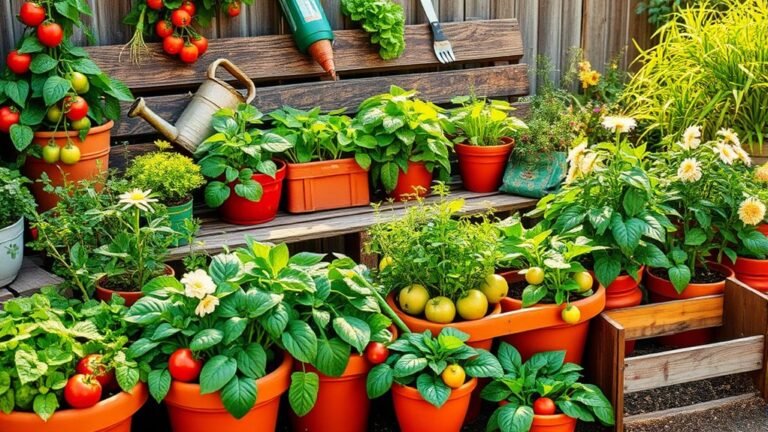

40 Grow Bag Gardening Ideas for Small Spaces
If you’re looking to maximize small spaces with grow bags, consider a vertical grow bag garden to save floor space. An herb garden in bags can spice up your meals, while a tomato tower optimizes yield. A grow bag salad bar makes harvesting greens easy, and perennial flower gardens add color. Create pollinator gardens to attract bees, and use fabric bags for easy care. There’s so much more to explore, so stick around for additional ideas!
Herb Garden in Grow Bags

Creating an herb garden in grow bags is a simple way to bring fresh flavors to your kitchen, especially when space is limited.
You can choose various herb varieties like basil, parsley, and mint. These indoor herbs thrive with proper herb care, including regular watering and sunlight.
Pairing them with compatible plants makes your garden even more productive and enjoyable.
Grow Bag Salad Bar

After enjoying the benefits of a tomato tower, you might want to expand your gardening repertoire with a grow bag salad bar.
With various grow bag varieties, you can easily cultivate leafy greens, herbs, and even radishes.
The salad bag benefits include space efficiency and easy access to fresh ingredients, making it a perfect solution for small spaces.
Enjoy your homegrown salads!
Perennial Flower Garden

While you might think that growing flowers requires a large garden, a perennial flower garden in grow bags can transform even the smallest spaces into vibrant displays of color and beauty.
Choose perennial flower varieties like daylilies and coneflowers, and use companion planting techniques to boost growth and attract pollinators.
With the right combinations, your small garden can flourish beautifully!
Compact Potato Growing

Growing potatoes in grow bags is a game-changer for those with limited space. You can try various potato varieties like Yukon Gold or Red Bliss to maximize your harvest.
For successful growth, focus on proper soil preparation—mix quality potting soil with compost for nutrients. Position your bags in a sunny spot, and soon you’ll enjoy fresh, home-grown potatoes right from your small garden!
Strawberries in Grow Bags

If you’re looking to enjoy fresh strawberries without a sprawling garden, planting them in grow bags is an excellent solution.
Choose compact strawberry varieties like ‘Albion’ or ‘Seascape’ for best results.
For ideal grow bag placement, make sure they receive at least six hours of sunlight daily.
With the right care, you’ll harvest delicious strawberries right from your small space!
Hanging Grow Bags

For those who love maximizing vertical space, hanging grow bags offer a fantastic alternative to traditional gardening.
You can easily cultivate hanging herbs like basil, parsley, and mint, making efficient use of limited areas.
Plus, these bags create stunning decorative displays, turning your small balcony or kitchen into a vibrant green space.
Enjoy fresh flavors while adding charm to your home!
Grow Bag Wall Planters

Have you ever thought about transforming a plain wall into a lush garden?
Using grow bag materials, you can create stunning wall planter designs that maximize your space. Hang multiple grow bags filled with colorful herbs or vibrant flowers, adding life to your walls.
This innovative approach not only beautifies your area but also makes gardening accessible, even in tight spots.
Succulent Display in Grow Bags

After enhancing your walls with vibrant grow bag planters, consider showcasing succulents in a similar fashion.
Mix various succulent varieties to create a visually appealing display that enhances grow bag aesthetics. Choose bags that complement your decor, and arrange them at different heights for added interest.
With minimal care, your succulent garden will thrive, bringing life and color to your space.
Indoor Grow Bag Setup
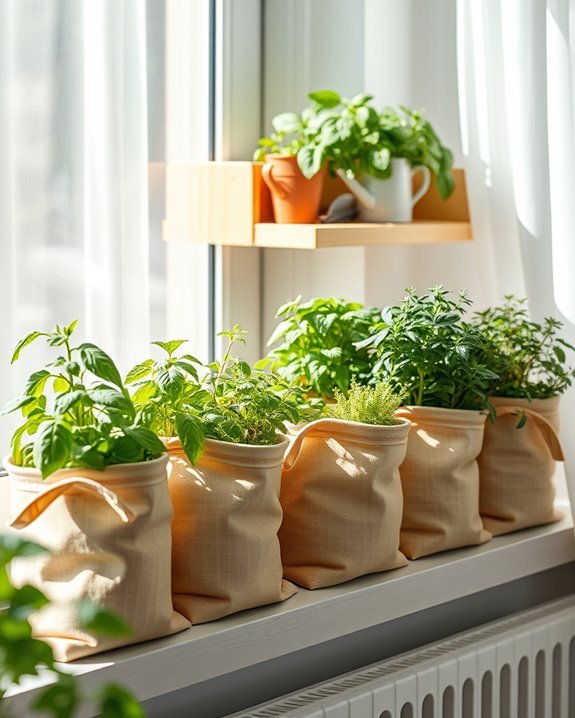
While transforming your home into a green sanctuary, setting up indoor grow bags can be an efficient and enjoyable way to cultivate plants.
Choose the right grow bag materials and soil selection for your plant varieties. Guarantee proper indoor lighting, temperature control, and humidity levels.
Employ effective watering techniques, air circulation, and pest management strategies for successful seed starting and healthy growth.
Spice Garden With Grow Bags
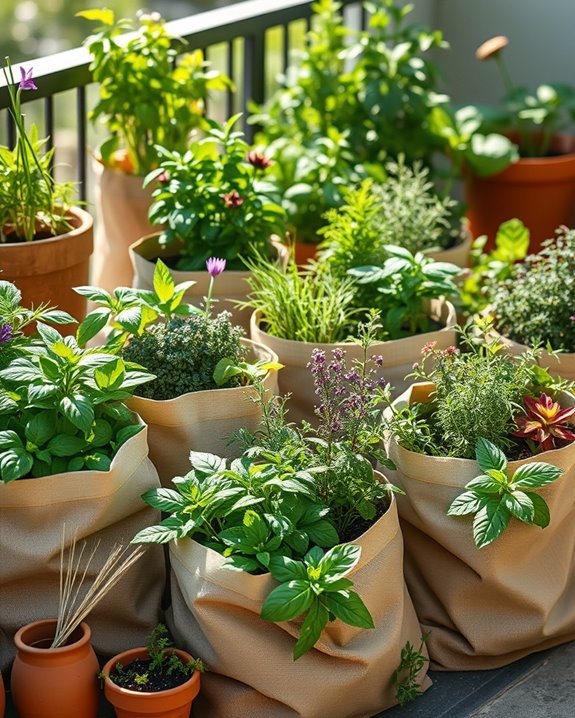
Creating an indoor spice garden with grow bags can bring fresh flavors to your cooking while adding greenery to your space.
You can easily grow a variety of spice varieties like basil, oregano, and thyme.
The grow bag benefits include excellent drainage and aeration, promoting healthy root growth.
Plus, they’re lightweight and portable, making it simple to rearrange your garden as needed.
Chives and Garlic in Grow Bags

Chives and garlic thrive beautifully in grow bags, making them perfect additions to your indoor garden.
You can enjoy various chive varieties, like garlic and onion chives, which add flavor and color. Plus, garlic offers numerous benefits, including enhanced immunity and heart health.
With minimal space, you’ll easily grow these herbs, elevating your culinary creations while maximizing your gardening experience.
Mixed Vegetable Planters

If you want to maximize your gardening space, mixed vegetable planters are an excellent choice.
By combining mixed vegetable varieties, you can create a thriving ecosystem in your grow bags.
Plus, the companion planting benefits enhance growth and deter pests.
Consider pairing tomatoes with basil or carrots with onions to make the most of your limited space while enjoying fresh, home-grown produce.
Colorful Flower Arrangements

How can you turn your grow bags into vibrant displays of color?
Start by choosing a mix of colorful blooms that thrive together.
Consider seasonal arrangements to guarantee your garden stays lively throughout the year.
Group flowers by height and create layers for visual interest.
With a little planning, your grow bags can become stunning focal points, showcasing nature’s beauty in small spaces.
Grow Bag Garden for Kids

Creating a vibrant garden isn’t just for adults; kids can enjoy the fun of gardening too! A grow bag garden is perfect for children’s gardening, offering easy access and manageable sizes.
You can teach kids about plants and responsibility through educational gardening. Let them pick their favorite seeds, nurture their plants, and watch them grow—it’s a wonderful way to spark curiosity and creativity!
DIY Grow Bag Stands

Building your own DIY grow bag stands can elevate your gardening experience while providing better organization and accessibility.
Consider portable stand options and multi-tiered stands for space-saving designs. You can create adjustable height stands using weather-resistant materials for sturdy support solutions.
Explore decorative stand ideas and aesthetic stand enhancements that offer easy assembly, ensuring your garden remains functional and visually appealing.
Seasonal Flower Rotations

As you plan your garden, incorporating seasonal flower rotations not only enhances aesthetic appeal but also promotes healthier plants.
By selecting diverse flower varieties, you can create vibrant displays throughout the year.
Follow planting schedules to guarantee that each variety thrives in its ideal season.
This approach not only keeps your garden colorful but also helps prevent pests and diseases, leading to robust blooms.
Edible Landscape Design

Incorporating small fruits into your garden is just the beginning of creating an edible landscape design.
You can enhance your space by integrating herbs, vegetables, and ornamental plants, resulting in beautiful edible landscaping.
Consider layering plants for visual interest and maximizing space.
This approach not only provides fresh produce but also creates a harmonious landscape integration that delights the senses and encourages biodiversity.
Companion Planting in Grow Bags

Companion planting can greatly enhance your grow bag gardening experience by promoting healthier plants and maximizing space.
Consider grow bag pairings like tomatoes with basil for pest deterrence strategies and nutrient sharing plants.
Seasonal compatibility is key; plant quick-growing radishes alongside slower-growing carrots.
These companion plant examples not only optimize grow bag compatibility but also boost maximizing space efficiency in your garden.
Compact Cabbage Growing

Maximizing space in grow bags can also lead to successful compact cabbage growing.
Try planting compact cabbage varieties like ‘Mini Savoy’ or ‘Cabbage Pixie’ for ideal yields.
Make sure to implement effective cabbage pest management strategies, such as using floating row covers or companion plants, to protect your crops.
With the right care, you’ll enjoy fresh, delicious cabbage even in limited spaces.
Vertical Herb Garden

If you’re looking to elevate your cooking with fresh herbs, creating a vertical herb garden is a fantastic way to save space while adding greenery to your home.
An herb wall can be easily set up using grow bags, allowing you to cultivate indoor herbs like basil, parsley, and mint.
This innovative solution brings fresh flavors right to your kitchen, enhancing your culinary experience.
Grow Bag Greenhouse

Building on the idea of growing fresh herbs indoors, a grow bag greenhouse takes your gardening efforts to the next level.
With the grow bag benefits of portability and improved drainage, you can easily create a mini greenhouse for your plants.
Plus, grow bag maintenance is simple, as they require less frequent watering and are easy to clean, making gardening enjoyable and hassle-free.
Grow Bags for Renters

For renters who want to enjoy gardening without the hassle of digging up a yard or dealing with strict landlord regulations, grow bags offer a perfect solution.
These portable gardening options let you create a vibrant space, even in limited areas. Plus, you can easily move them if you need to comply with renter restrictions or simply want to rearrange your setup.
Custom Grow Bag Sizes

Custom grow bag sizes can transform your gardening experience, allowing you to tailor your planting space to fit your unique needs.
By opting for custom sizes, you can create tailored designs that perfectly fit your balcony, patio, or even indoor spaces.
Whether you want to grow herbs, vegetables, or flowers, these personalized bags help maximize your harvest while enhancing your garden’s aesthetics.
Portable Grow Bag Systems

Portable grow bag systems offer a flexible and efficient way to garden anywhere, whether you’re on the go or simply rearranging your outdoor space.
These systems utilize lightweight materials, making them easy to move and perfect for mobile gardening. You can quickly change your garden’s layout, adapt to changing sunlight, or transport your plants indoors during inclement weather.
Enjoy gardening without limitations!
Edible Edging With Grow Bags

While many gardeners focus on traditional planting beds, using grow bags for edible edging can transform your garden into a lush and functional space.
You can create decorative borders by planting herbs, strawberries, or compact vegetables in grow bags. This not only enhances your garden’s appearance but also provides easy access to fresh produce, making your outdoor area both beautiful and practical.
Grow Bags in Limited Sunlight

Even if your garden doesn’t get full sun, you can still enjoy a thriving grow bag garden.
Focus on shade tolerant plants like lettuce, spinach, and herbs, which can flourish in limited sunlight options.
Position your grow bags where they receive the most light possible, and monitor moisture levels closely to ascertain your plants stay healthy and productive throughout the growing season.
Recycling Old Materials for Grow Bags

If you’re looking to make the most of your gardening space, consider recycling old materials to create your own grow bags.
Use upcycled materials like vintage fabric or repurposed items to craft creative containers. These eco-friendly alternatives support sustainable gardening and help reduce household waste.
With some innovative uses, DIY grow bags can transform your garden through simple garden recycling techniques.
Multi-Tiered Grow Bag Garden

A multi-tiered grow bag garden maximizes vertical space, allowing you to cultivate a diverse array of plants in a compact area.
By utilizing multi-tiered designs, you can create an eye-catching display while saving ground space.
Consider stacking grow bags or using shelves to enhance maximizing verticality.
This approach not only optimizes your gardening area but also adds visual interest to your small space.
Color Coordination With Flowers

When you thoughtfully coordinate flower colors in your grow bags, you create a vibrant and harmonious display that can elevate your garden’s aesthetic.
Experiment with colorful blooms to form unique flower combinations, mixing contrasting shades for visual impact.
Use seasonal colors to establish color themes, ensuring your floral aesthetics shine through.
Create harmonious palettes and vibrant arrangements that highlight blooming patterns, enhancing your garden color schemes.
Seasonal Rotations in Grow Bags

To maximize your grow bags’ potential, consider implementing seasonal rotations that keep your garden fresh and productive.
By practicing seasonal planting, you can enjoy diverse crops throughout the year. Rotate your crops each season to prevent soil depletion and reduce pests.
For example, follow leafy greens with root vegetables, ensuring your grow bags remain vibrant and healthy, yielding bountiful harvests.
Grow Bags for Pollinator Gardens

Creating a vibrant pollinator garden in grow bags can enhance your outdoor space while supporting essential ecosystems.
Choose pollinator friendly plants like lavender, bee balm, and coneflowers to attract beneficial insects.
Place your grow bags in sunny spots, ensuring they receive enough water.
With a little care, you’ll create a thriving environment that encourages pollinators, benefiting both your garden and local wildlife.
Small Space Grow Bag Strategies

Even if you’re short on space, grow bags can transform any area into a productive garden.
Focus on space optimization with modular designs that fit your environment. Choose lightweight materials for easy relocation.
Implement effective irrigation solutions and select quality soil for healthy plants.
Don’t forget pest management, seasonal planning, and maintenance tips to guarantee your urban gardening thrives with adequate sunlight exposure.
Using Fabric Grow Bags

When you choose fabric grow bags for your gardening needs, you’re not just opting for a practical container; you’re also enhancing plant health and growth.
Fabric grow bags promote excellent drainage and air circulation, preventing root rot and encouraging healthier root systems.
You’ll discover numerous gardening benefits, including lightweight portability and versatility, making them perfect for small spaces and urban gardening projects.
Grow Bags for Container Gardening

Fabric grow bags aren’t only beneficial for enhancing plant health but also serve as fantastic options for container gardening.
You’ll enjoy the grow bag benefits, such as improved drainage and aeration, which lead to healthier root systems.
Made from breathable materials like felt or durable polypropylene, these bags are lightweight and easy to move, making them perfect for small spaces.
Choosing the Right Grow Bag Material

When it comes to choosing the right grow bag material, you’ve got a few solid options to contemplate.
Different fabric types can impact your plants’ growth, so consider breathable materials that promote healthy root systems.
Additionally, think about bag durability; some fabrics withstand wear and tear better than others.
Ultimately, selecting the right material guarantees your plants thrive in urban settings.
Best Vegetables for Grow Bags

Choosing the right vegetables for grow bags can make a significant difference in your urban gardening success.
Consider planting heirloom tomatoes, bush beans, and salad greens for a hearty harvest.
Root vegetables like container carrots thrive in these bags, as do dwarf peppers, compact cucumbers, and mini zucchini.
These options maximize your space while delivering delicious and fresh produce right at your doorstep.
Herbs That Thrive in Grow Bags

Grow bags aren’t just great for vegetables; they also provide an ideal environment for a variety of herbs.
You can explore basil varieties, experiment with mint types, and follow rosemary tips for success.
Pay attention to parsley care and enjoy cilantro growing.
Consider thyme selection, learn chives uses, appreciate oregano benefits, and try dill planting for a thriving herb garden.
Creative Planting Ideas for Grow Bags

While many gardeners stick to traditional planting methods, you can release your creativity with grow bags to maximize your urban garden’s potential.
Experiment with creative color combinations and layering techniques to create stunning decorative arrangements.
Consider themed plant groups, seasonal color schemes, and companion plant aesthetics.
Mix plant height variations and texture contrasts, incorporating fragrant herb combinations and edible flower mixes for a vibrant, functional display.
Vertical Gardening With Grow Bags

If you’re looking to maximize your limited space, vertical gardening with grow bags is a smart solution.
Utilize wall planters and hanging gardens to create eye-catching tiered arrangements.
Decorative trellises enhance urban aesthetics while allowing for plant stacking, making the most of vertical space.
Grow delicious vertical food in this innovative way, transforming your small area into a lush, vibrant garden.
Using Grow Bags for Container Gardening

When you’re short on space but still want to enjoy the pleasures of gardening, using grow bags for container gardening can be a game changer.
They’re lightweight, portable, and come in various sizes for different soil types.
Just remember to establish a consistent watering schedule; the fabric allows for excellent drainage, ensuring your plants thrive without drowning.
Happy gardening!
DIY Grow Bags From Recycled Materials

Grow bags aren’t just a convenient option for container gardening; they can also be made at home using recycled materials.
You can create your own using old t-shirts, burlap sacks, or feed sacks. Plastic containers, coffee bags, and used totes work well too.
For small plants, try newspaper pots or cardboard boxes.
Get creative with these repurposed materials and start gardening!
Drainage Solutions for Grow Bags

Proper drainage is essential for the health of your plants in grow bags.
Use drainage materials like gravel or perlite to create drainage layers that prevent excess water buildup. Make sure your bags have drainage holes for effective moisture control.
Additionally, bag elevation improves aeration techniques, allowing soil composition to breathe and ensuring your plants thrive without drowning in water.
Companion Planting in Grow Bags

Creating a thriving urban garden in grow bags can be enhanced by incorporating companion planting strategies.
By focusing on plant compatibility and seasonal pairings, you can improve pest management and nutrient balance.
Use intercropping strategies to maximize yield while practicing crop rotation.
Organic companions will help attract beneficials, promoting a healthier ecosystem in your garden space.
Enjoy the benefits of diverse planting!
Grow Bags for Small Spaces

Even if you have limited outdoor space, grow bags offer a fantastic solution for urban gardening.
Their space efficient designs let you maximize your planting area, while compact gardening techniques make it easy to tend to your plants.
You can arrange grow bags on balconies, patios, or even indoors, creating a vibrant garden without needing a large yard.
Enjoy fresh herbs and veggies in any small space!
Maximizing Sunlight Exposure With Grow Bags

To make the most of your grow bags, positioning them for ideal sunlight exposure is key.
Pay attention to sunlight angles throughout the day and place your bags where they’ll receive maximum light.
Use shading techniques, like placing taller plants nearby, to protect smaller ones from harsh afternoon sun.
This approach guarantees your plants thrive and produce bountiful harvests in your urban garden.
Insulating Grow Bags for Winter Gardening

As the seasons change and temperatures drop, insulating your grow bags becomes essential for winter gardening success.
Use insulating materials like burlap or foam to create effective thermal barriers that enhance heat retention.
This winter protection helps keep your plants cozy and thriving, even in chilly conditions.
Don’t underestimate the power of insulation—your grow bags will thank you for it!
Grow Bags for Urban Balconies

Urban balconies offer a fantastic opportunity for gardening enthusiasts to maximize their green space, and grow bags are perfect for this setting.
You can easily incorporate balcony herbs and vegetables into decorative planters for seasonal color.
Opt for lightweight options to enhance vertical aesthetics and utilize privacy screens.
Embrace small space gardening with grow bags for effective space optimization and a vibrant urban gardening experience.
Growing Fruits in Grow Bags

Growing fruits in grow bags opens up a world of possibilities for urban gardeners enthusiastic to enjoy fresh produce.
You can explore various fruit varieties, including seasonal and exotic fruits. Focus on soil nutrition and pest management while practicing fruit pruning and spacing.
Try vertical fruiting and companion fruits to maximize space and yield, ensuring your garden thrives with organic fruits.
Customizing Grow Bags With Labels

Customizing your grow bags with labels can make a significant difference in your gardening experience.
With a thoughtful label design, you can easily achieve plant identification, ensuring you know what’s growing where. Use waterproof markers or printed labels to withstand the elements.
This simple step not only organizes your garden but also adds a personal touch to your urban gardening project.
Organic Fertilizers for Grow Bags

Maintaining adequate moisture in your grow bags sets the stage for healthy plants, but nourishment is just as important.
Use organic compost and natural amendments to boost soil nutrients. Pay attention to nutrient timing and application methods; adjust fertilizer ratios based on growth stages.
Eco-friendly options promote plant health while ensuring steady nutrient release, keeping your urban garden thriving and resilient.
Pest Control Strategies in Grow Bags

To keep your urban garden flourishing, you need effective pest control strategies tailored for grow bags.
Utilize natural predators and beneficial insects alongside organic repellents like neem oil and garlic spray. Incorporate companion planting and trap crops to deter pests.
Employ insect traps, pheromone traps, and insect netting as barrier methods. Maintain healthy soil and practice crop rotation for a thriving garden ecosystem.
Using Grow Bags for Microgreens

After addressing pest control, let’s explore how grow bags can be a game-changer for cultivating microgreens in urban settings.
You can easily grow various microgreens varieties like arugula, radish, and basil in these bags.
Make sure you provide ideal lighting, either through natural sunlight or grow lights, to boost their growth.
With grow bags, you’ll enjoy fresh microgreens right at home!
Grow Bags in Community Gardens

While you might think that space is a limitation in community gardens, grow bags prove otherwise. They enhance garden design by maximizing shared resources and enabling collaborative planting.
Participating in local workshops fosters community engagement, while educational programs teach crop rotation and sustainability practices.
Plus, grow bags encourage social interactions, allowing neighbors to connect over their gardening experiences and shared harvests.
Choosing the Right Size Grow Bag

Choosing the right size grow bag is crucial for your plants’ success, as the wrong dimensions can hinder growth and yield.
Consider size considerations like bag dimensions, root depth, and planting density. Guarantee your bag design supports adequate plant spacing while accounting for weight capacity.
Match the grow bag to your garden layout and the growth stage of your plants, factoring in material thickness for durability.
Decorating Grow Bags for Aesthetic Appeal

Once you’ve selected the perfect size grow bags for your plants, it’s time to think about how to make them visually appealing.
Consider using painted patterns or fabric choices that reflect your style. Add decorative accessories, like upcycled materials or personalized designs, to create unique color schemes.
Incorporate artistic embellishments, themed decorations, or seasonal motifs to enhance the aesthetic with nature-inspired art.
Rotating Crops in Grow Bags
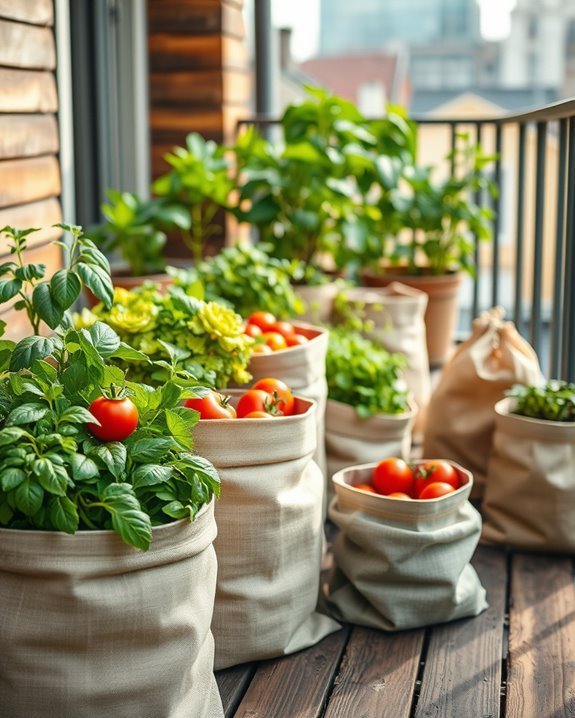
To maximize your harvest and maintain soil health, rotating crops in grow bags is essential.
Implement crop rotation by changing the types of plants you grow each season. This practice helps prevent soil nutrient depletion and reduces pest buildup.
For seasonal planting, consider using legumes to enrich the soil after heavy feeders like tomatoes. This way, you’ll guarantee a thriving garden year-round.
Grow Bags for Hydroponic Systems

Exploring innovative gardening methods can enhance your urban gardening experience, and using grow bags for hydroponic systems is a fantastic option.
You’ll enjoy hydroponic benefits like faster growth and higher yields. Guarantee proper water management and choose the right grow bag types for various plant varieties.
Monitor pH levels, optimize nutrient solutions, and follow lighting requirements for effective system integration and maintenance tips.
Planting Flowers in Grow Bags

Have you ever considered how planting flowers in grow bags can transform your urban garden?
Experiment with various flower varieties and planting techniques for stunning container arrangements.
Combine seasonal blooms and fragrant flowers for vibrant color combinations that attract pollinators.
Use vertical displays for added interest, and don’t forget companion flowers to enhance growth.
Follow maintenance tips for a thriving, beautiful garden.
Space-Saving Solutions With Grow Bags

Transforming your urban garden with flowers is just the beginning; grow bags also offer innovative space-saving solutions.
Creating a Grow Bag Herb Garden

Whether you have a small balcony or a tiny backyard, creating a grow bag herb garden is a practical way to bring fresh flavors to your kitchen.
Start with easy herbs like basil, parsley, and mint using herb selection tips to match your climate.
Remember to water consistently and prune regularly, applying herb maintenance techniques to keep your plants thriving and productive.
Tips for Growing Potatoes in Grow Bags

Growing potatoes in grow bags can be a rewarding experience, especially for urban gardeners with limited space.
Choose early potato varieties like ‘New Potatoes’ for quicker yields.
Make sure your bags have proper drainage and fill them with nutrient-rich soil.
For effective pest management, check your plants regularly and use organic methods to deter pests.
Enjoy fresh, homegrown potatoes right from your balcony!
Utilizing Grow Bags for Seed Starting

Since urban spaces can be limited, utilizing grow bags for seed starting offers a flexible and efficient solution for aspiring gardeners.
Focus on proper seed selection to guarantee you’re choosing varieties suited for your environment.
Use effective germination techniques, like maintaining moisture and warmth, to encourage healthy growth.
With grow bags, you can easily manage your seeds and optimize your limited space.
How to Store Grow Bags During Off-Season

When it’s time to put your grow bags away for the off-season, proper storage is key to ensuring they last for many gardening seasons to come.
Start by cleaning them thoroughly to prevent pests and disease.
Store them in a cool, dry place, avoiding direct sunlight.
This simple grow bag maintenance will protect your investment and make next season’s gardening a breeze.
Troubleshooting Common Grow Bag Issues

What should you do when your grow bags show signs of trouble?
First, check your grow bag drainage; excess water can lead to root rot. If you spot soggy soil, elevate the bags or add drainage holes.
Next, inspect for grow bag pests. Use organic pesticides or introduce beneficial insects to keep them at bay, ensuring your plants stay healthy and thriving.
Using Grow Bags for Succulents

Using grow bags for succulents can be a game-changer for urban gardeners looking to maximize space and improve drainage.
You can choose various succulent varieties that thrive in your climate, adjusting soil mix and watering needs accordingly.
With proper sunlight requirements, decorative options, and pest resistance, you can easily manage seasonal care, container arrangements, and fertilizer choices while exploring propagation techniques for more plants.
Multi-Functional Grow Bags
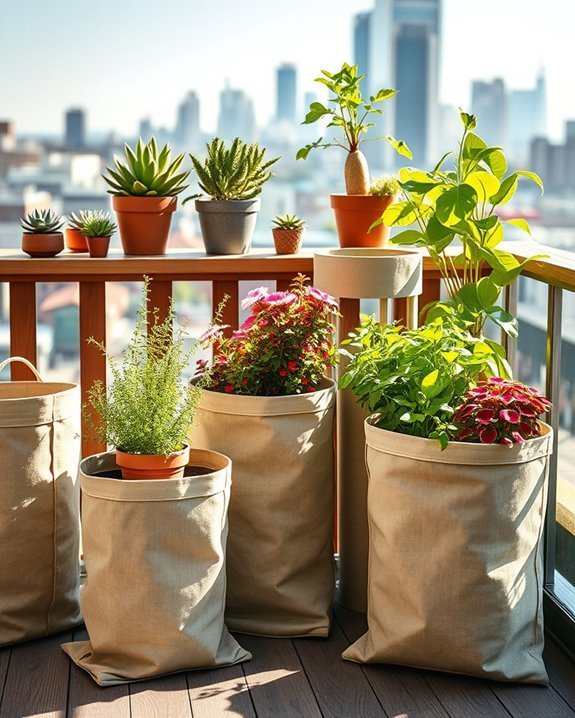
Grow bags aren’t just great for succulents; they offer versatility for a wide range of plants in urban gardening.
You can experiment with creative combinations, mixing herbs, vegetables, and flowers in a single bag.
Their multifunctional designs allow for easy mobility and ideal drainage, making them perfect for small spaces.
Embrace the flexibility of grow bags to maximize your urban garden’s potential!
Grow Bags for Roof Gardens

Transforming your roof into a green oasis can be as simple as incorporating a few well-placed grow bags.
These lightweight grow bags not only enhance roof garden aesthetics but also allow you to easily rearrange plants based on sunlight and space.
Choose vibrant flowers or fresh herbs to create a stunning visual impact while enjoying the benefits of gardening right above your urban home.
Sustainability Practices With Grow Bags

While urban gardening presents unique challenges, adopting sustainable practices with grow bags can greatly mitigate some of these issues.
You can use sustainable materials and local sourcing to minimize your environmental impact.
Implement composting techniques for waste reduction, and focus on organic gardening to promote health.
Embrace eco-friendly practices like water conservation and energy efficiency to create a thriving, sustainable garden in your urban space.
Conclusion
Incorporating grow bags into your urban gardening routine opens up a world of possibilities. You’ve learned how to choose the right materials, the benefits they bring, and the best plants to grow. Whether you’re cultivating herbs, vegetables, or even succulents, these bags can fit into any space. Plus, with their sustainability practices, you’re not just gardening; you’re making a positive impact. So grab those grow bags and start transforming your urban space into a vibrant garden today!