
How to Clean Glass Door Shower
You can get a streak-free glass shower door fast by squeegeeing water after each shower, spraying a 1:1 vinegar‑and‑water mix (add a drop of dish soap for grease), letting it sit a minute, then scrubbing with a nonabrasive sponge and rinsing. Dry with a microfiber cloth in overlapping top‑to‑bottom strokes. For mineral buildup, use vinegar cloths or a baking soda paste; avoid metal scrapers and harsh acids. Keep going to learn maintenance, tools, and repair tips.
Quick: Clean a Glass Shower Door in Under 20 Minutes
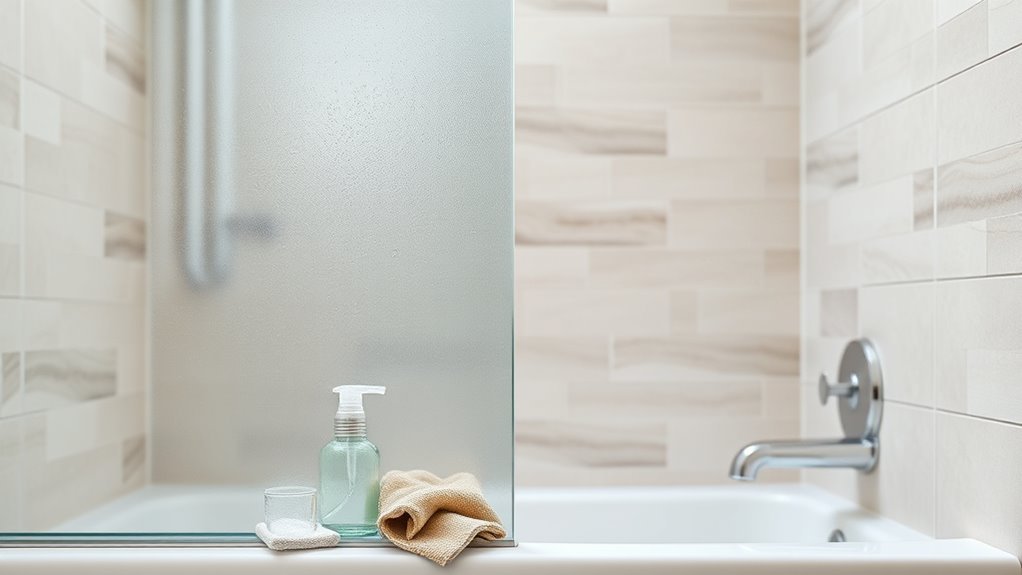
If you’re short on time but want sparkling shower doors, you can finish a quick clean in under 20 minutes with just a few tools and a simple routine.
Start by squeegeeing loose water top-to-bottom, then spray a vinegar-water mix or mild glass cleaner. Let it sit a minute, scrub spots with a nonabrasive sponge, and rinse.
Dry with a microfiber towel to prevent streaks.
For textured glass or decorative panels that look like glass art, focus scrub motions on crevices. Finish by treating tracks and seals.
Skip harsh scrubbers that mimic window tinting tools to avoid scratches.
Know Your Glass: Types and What Cleaners Each Need
Because glass varies in composition and finish, the cleaner you choose should match the type—clear annealed, tempered, frosted, patterned, laminated, or coated—so you don’t damage surfaces or leave residue.
You’ll use mild, non-abrasive cleaners for coated or laminated panes to protect bonds and anti-water treatments.
For frosted or patterned glass, pick gentle detergents to avoid dulling texture.
Tempered and annealed glass tolerate standard glass cleaners, but avoid ammonia on some coatings.
If you display Glass art near the shower or use privacy films, test cleaners on a small area first to prevent clouding or adhesive failure.
Safety First: Protective Gear and Ventilation
When you’re cleaning glass doors, prioritize protective gear and ventilation to keep yourself safe from chemical fumes, broken glass, and slips. Wear gloves, goggles, and non-slip shoes, and open windows or run an exhaust fan for proper ventilation. Move towels to catch drips, and don’t work alone if glass is shattered. Keep children and pets out of the area. If a product causes irritation, stop and ventilate further. Below is a quick checklist:
| Item | Purpose | Tip |
|---|---|---|
| Gloves | Skin protection | Use chemical-resistant pairs |
| Goggles | Eye safety | Fit snugly |
| Fan/Open Window | Proper ventilation | Place near door |
Essential Tools and Cleaners for Glass Shower Doors

Before you start scrubbing, gather the right tools and cleaners so the job goes quickly and safely. You’ll want a squeegee with a rubber blade, a microfiber cloth, a non-abrasive sponge, and a soft-bristled brush for tracks.
Use a pH-balanced commercial glass cleaner for regular maintenance and a mild, streak-free formula for stubborn soap scum. Avoid abrasive powders or steel wool that can damage decorative etching or any glass art finishes.
Keep a spray bottle for dilutions, rubber gloves, and a towel for floors. Test cleaners on an inconspicuous spot before full use.
Use Natural Cleaners: Vinegar, Baking Soda, Lemon Recipes
You can tackle soap scum and water spots with simple, natural cleaners you probably already have. Mix equal parts white vinegar and water in a spray bottle for daily maintenance.
Make a baking soda paste for stubborn buildup. These two DIY solutions are safe, cheap, and easy to use on glass doors.
Vinegar Spray Solution
Looking for a simple, natural way to tackle streaky glass? You’ll love a vinegar spray solution: mix equal parts white vinegar and water in a spray bottle, add a few drops of dish soap for cling, and shake gently.
Use on shower doors to dissolve soap scum and mineral deposits, then squeegee or microfiber-dry for Glass polishing results.
Try these tips:
- Spray generously, let sit 2–5 minutes
- Agitate with a soft cloth or non-scratch sponge
- Rinse with warm water, squeegee dry
- Repeat weekly for maintenance
These vinegar recipes are safe, inexpensive, and effective for sparkling doors.
Baking Soda Paste
If vinegar handles dissolving soap scum, baking soda adds gentle abrasion to lift stubborn grime and hard-water rings without scratching glass.
Mix baking soda with a little water to form a spreadable paste, apply with a damp cloth or sponge, and scrub in circular motions over soiled areas.
Rinse thoroughly and buff with a microfiber cloth to prevent streaks.
Test an inconspicuous spot first to avoid aggravating any existing glass etching or damaging decorative patterns.
Use this paste sparingly on treated or antique glass, and always follow manufacturer care guidance to maintain clarity and finish.
Best Commercial Cleaners and When to Use Them
When stains, fingerprints, or heavy grime won’t lift with water and microfiber alone, reach for a commercial glass cleaner designed for the task; professional formulas cut grease faster, give better clarity, and often leave fewer streaks than DIY mixes.
Choose cleaners labeled for shower glass, avoid ammonia on glass tinting or decorative etching, and test a hidden spot first. Use soft applicators and rinse well.
- Daily spray for light maintenance
- Acid-based cleaner for mineral buildup (use sparingly)
- Non-ammonia, streak-free formula for treated glass
- Gel or foam for vertical surfaces
Remove Soap Scum Safely (Step‑by‑Step)
Before tackling heavy mineral stains or switching cleaners, tackle soap scum with a step‑by‑step method that protects your glass and finishes. Gather a spray bottle, white vinegar diluted 1:1 with water, dish soap, a microfiber cloth, and a nonabrasive sponge. Spray, wait 5–10 minutes, then gently scrub in circular motions. Rinse thoroughly and dry with a squeegee to prevent streaks. For Eco friendly options, swap vinegar for a baking soda paste as needed. Use Child safe methods: keep cleaners out of reach, label bottles, and ventilate. Repeat weekly to avoid buildup.
Dissolve Hard Water Stains and Mineral Deposits
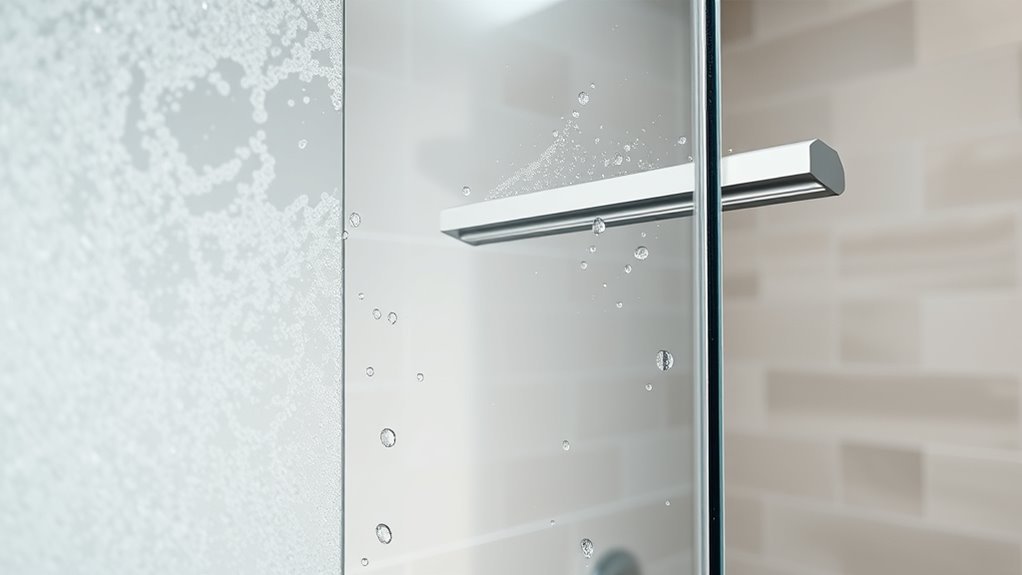
Because mineral deposits bond to glass over time, you’ll need stronger, targeted techniques to dissolve hard water stains without scratching the surface.
Start by soaking a soft cloth in white vinegar or a 1:1 vinegar‑water mix, press it onto water spots for 10–15 minutes, then gently rub.
For stubborn buildup, make a paste of baking soda and water, apply, let sit, then rinse.
- Use nonabrasive cloths or microfiber.
- Test cleaners on a small area first.
- Rinse thoroughly to protect seals and hardware.
- Dry with a squeegee to maintain glass clarity.
Banish Streaks and Cloudy Film for a Crystal Finish
If streaks or a cloudy film keep showing up after cleaning, grab a clean microfiber cloth and a streak‑free glass cleaner (or a 1:1 vinegar‑water mix).
Work from top to bottom in overlapping S‑motions, wiping each section dry as you go to prevent drips and rehazing.
After drying, inspect in angled light to spot remaining haze.
For persistent cloudiness, rule out glass etching—scratches or surface damage won’t polish out and may need professional assessment.
Also check for decorative films that alter appearance; some trap residue or degrade, requiring careful removal or replacement to restore a crystal finish.
Clean Shower Door Tracks, Hinges, and Hardware
Start by clearing debris from the tracks so the doors slide smoothly and water doesn’t pool.
Check and oil hinges as needed, tightening any loose screws to keep doors aligned.
Finish with simple rust-prevention steps for metal hardware to prolong their life.
Track Cleaning Tips
When you’re tackling shower door maintenance, give the tracks, hinges, and hardware the same attention you do the glass — they collect grime that keeps doors from sliding and sealing properly. Start by removing visible debris with a soft brush, then vacuum or rinse.
Apply a mild cleaner; let it sit briefly, scrub with an old toothbrush, and wipe dry to prevent mineral buildup that dulls glass color and casts shadows under shower lighting.
Lubricate moving parts lightly with silicone spray and test operation. Repeat monthly to avoid corrosion and mold.
- Brush loose grit first
- Use mild, nonabrasive cleaner
- Rinse and dry thoroughly
- Lightly lubricate moving parts
Hinge Maintenance Steps
Although hinges are small, they’re critical to smooth, leak-free operation, so check them regularly for grime, rust, and loose screws.
Wipe hinges with a mild cleaner and a soft brush, removing soap scum and debris from pivot points.
Tighten screws systematically; label their positions if you remove them.
Apply a few drops of silicone-based hinge lubrication to moving parts, cycle the door to distribute it, and wipe excess.
If hinges show structural damage or persistent wobble after tightening and lubrication, plan hinge replacement using matching parts and follow manufacturer torque specs.
Test operation and adjust alignment for a tight seal.
Hardware Rust Prevention
Now that your hinges are tight and lubricated, protect them and nearby hardware from rust by keeping tracks, screws, and metal fittings clean and dry. You’ll want to routinely inspect and act to prevent corrosion and address hardware rust early.
Wipe surfaces after showers, clear debris from tracks, and replace worn seals to limit moisture buildup.
- Wipe metal parts with a microfiber cloth after use.
- Use a small brush to clear track grime weekly.
- Apply a thin silicone spray to moving parts sparingly.
- Replace rusty screws or fittings promptly to prevent spread.
Frameless vs Framed Doors: Care and Common Pitfalls
Because frameless and framed glass doors differ in construction and hardware, you’ll need slightly different care routines to keep each type looking and working their best.
For frameless durability, wipe seals and hinges gently with a damp microfiber to avoid loosening fasteners. Check silicone seams for gaps and reapply sealant if water trails appear.
For framed aesthetics, clean metal channels and track areas to prevent soap scum buildup that can corrode finishes and jam rollers.
With both types, use nonabrasive cleaners, squeegee after showers, and avoid acidic or abrasive products that etch glass or damage metal.
Regular, targeted maintenance prevents costly repairs.
Cleaning Frosted or Textured Glass Without Damage
When you clean frosted or textured glass, treat the surface gently to preserve its finish and patterned detail. Use mild cleaners—diluted dish soap or white vinegar—applied with a soft microfiber cloth.
Avoid abrasive pads, harsh acids, or ammonia-based products that can dull Frosted glass or damage Textured surfaces. Rinse thoroughly and dry by blotting to prevent streaks.
For stubborn spots, let the cleaner sit briefly, then wipe; don’t scrub aggressively.
- Use a soft microfiber or sponge
- Test any cleaner on a hidden area first
- Work in small sections, rinsing as you go
- Pat dry with a clean towel
Prevent Buildup: Squeegees, Repellents, and Sealants
Keep buildup off your glass by adopting a simple daily squeegee routine to remove water and soap before they dry.
Consider a glass repellent to make water bead and reduce spotting, and compare products for durability and safety.
If you need longer protection, apply a compatible sealant following the manufacturer’s directions for surface prep and curing time.
Daily Squeegee Routine
If you want spotless glass with minimal effort, adopt a daily squeegee routine that removes water and soap before they etch or stain the surface. You’ll run the squeegee from top to bottom after each shower, paying attention to edges and decorative patterns so residue doesn’t hide in grooves.
Consider glass thickness when choosing a squeegee pressure—lighter on thin panels, firmer on thick glass. Wipe frames and tracks afterward to prevent drips.
- Use a soft-rubber blade to avoid scratches
- Angle the blade for fewer streaks
- Rinse the squeegee weekly
- Keep a microfiber towel handy for detailing
Glass Repellent Options
Choose a repellent that matches your maintenance style and glass type so buildup never gets a foothold. You’ll pick between spray-on, paste, or wipe-on repellents.
Sprays suit frequent light upkeep, pastes last longer between treatments, and wipes offer quick touch-ups. Check compatibility with glass tinting or decorative etching to avoid discoloration or surface damage.
Apply repellents to clean, dry glass and buff per instructions, then test a small hidden area first.
Combine repellents with your squeegee routine to minimize soap scum and hard-water spots, and reapply according to wear rather than on a fixed schedule.
Sealant Application Tips
When you pair a good squeegee routine and occasional repellents with a properly applied sealant, you’ll cut down on soap scum, hard-water staining, and the need for deep scrubs.
Be sure your sealant application is even: clean glass, mask edges, and apply in thin beads. Follow manufacturer directions for proper curing — don’t rush use or expose to water.
Reinspect seams annually and touch up worn spots.
- Clean surface thoroughly before sealant application
- Use painter’s tape for straight lines
- Allow full proper curing time
- Replace degraded sealant promptly
Weekly Routine to Keep Glass Spotless
Although a deep clean is great once in a while, keeping glass spotless comes down to a simple weekly routine you can finish in 10–15 minutes. Wipe glass with a squeegee after showers, spray a mild vinegar solution, and buff with a microfiber cloth. Clean tracks and hinges, and check sealant edges briefly. Also consider how decorating themes and lighting options affect visible streaks; adjust brightness to hide minor flaws.
| Task | Time |
|---|---|
| Squeegee & spray | 3–5 min |
| Buff & detail | 5–7 min |
| Tracks & check seal | 2–3 min |
Monthly Deep‑Clean Checklist
Once a month, gather your cleaning supplies—glass cleaner, a soft squeegee, microfiber cloths, and a mild descaler for mineral buildup.
Focus on removing hard water stains with the descaler and a nonabrasive pad until the glass is clear.
Finish by applying a protective treatment or water-repellent to keep glass cleaner longer.
Gather Cleaning Supplies
Ready to tackle a monthly deep clean? Gather supplies so you work efficiently and avoid cleaning myths like “more product means better results.” Choose eco-friendly solutions when possible; they’ll cut residue and irritants.
- Microfiber cloths and a squeegee for streak-free glass
- A nonabrasive scrub brush and soft sponge to protect seals
- An eco-friendly glass cleaner or diluted vinegar solution for safe cleaning
- Rubber gloves and a small bucket to mix and carry solutions
You’ll prep faster with these items on hand, reducing repeat cleanings and preserving hardware without harsh chemicals.
Tackle Hard Water Stains
How do you get mineral deposits off glass doors without scrubbing forever? Start by mixing equal parts white vinegar and water in a spray bottle, heat slightly, and spray the stains. Let it sit 10–15 minutes, then wipe with a microfiber cloth and rinse.
For stubborn spots, apply a paste of baking soda and water, rub gently, then rinse thoroughly.
Use a squeegee after each shower and consider water filtration to reduce future buildup. Don’t ignore hardware or the shower curtain track—wipe those areas too.
Repeat monthly as part of your deep‑clean checklist to keep glass clear.
Protect Glass After Cleaning
After you’ve removed mineral buildup and rinsed thoroughly, protect the glass to keep it clear longer and cut down on future scrubbing. Apply a water-repellent treatment to reduce spotting and preserve decorative patterns; these coatings also help maintain glass durability. Wipe dry after each shower to prevent films. Reapply sealant every few months or after heavy use.
- Use a silicone squeegee after showering
- Apply a commercial glass protectant per instructions
- Test products on a small area with decorative patterns first
- Avoid abrasive cleaners to preserve glass durability
Keep records of treatments so maintenance stays on schedule.
Quick Daily Habits That Reduce Heavy Cleaning
Because small, consistent actions add up, adopting a few quick daily habits can keep glass doors clear and cut down on heavy cleaning sessions. Wipe water spots after showers with a squeegee or microfiber; don’t let mineral deposits form. Open ventilation to speed drying. If your door has decorative patterns or glass etching, gently follow contours to avoid residue buildup.
| Habit | Effect |
|---|---|
| Squeegee | Removes droplets |
| Ventilate | Stops mold |
Do a light spray of vinegar solution once weekly on tracked areas. Small routines prevent stubborn grime and save time.
Common Mistakes That Damage Glass or Finishes
Don’t use abrasive cleaners or scrubbers on glass— they’ll leave micro-scratches that attract grime.
Don’t pry off stuck residue with metal tools, since they can chip glass and ruin frames. Use soft cloths and plastic scrapers instead to protect both glass and finishes.
Using Abrasive Cleaners
When you grab an abrasive cleaner for tough grime, remember that those gritty powders and scouring pads can scratch glass and strip nearby finishes, leaving permanent marks or dull spots. You should avoid abrasive cleaners on shower doors because glass scratching is often irreversible and ruins seals or coatings.
Instead, choose nonabrasive solutions and soft tools. Consider these safer practices:
- Test cleaners on an inconspicuous spot first.
- Use a soft microfiber cloth or sponge.
- Rinse thoroughly to remove residues that can abrade.
- Apply gentle pressure; let cleaner soak if needed.
Protect finishes by choosing products labeled nonabrasive.
Harsh Metal Tools
If you grab a razor blade, metal scraper, or wire brush to tackle stuck-on gunk, you can easily score the glass, nick frames, and strip protective coatings—damage that’s often permanent.
Don’t use harsh metal tools on shower doors. You’ll create scratches that trap grime, weaken seals, and ruin finishes. For glass safety, choose plastic scrapers, soft microfiber, and nonabrasive cleaners.
Work gently along the surface and rinse frequently to avoid rubbing debris into the glass. If mineral deposits resist, soak a cloth in vinegar or a commercial descaler designed for glass rather than switching to metal implements.
Troubleshooting: When to Call a Pro or Replace Glass
Since glass issues can range from stubborn stains to structural cracks, you’ll want to quickly assess damage so you can decide whether to fix it yourself, hire a pro, or replace the pane entirely. Check for chips, deep scratches, seal failure, or spreading cracks.
Assess glass damage quickly—identify chips, deep scratches, seal failure, or spreading cracks before deciding repair, replacement, or pro help.
Use Maintenance tips: gentle cleaners, squeegee after showers, and soft cloths. Avoid common mistakes like abrasive pads or DIY repairs on tempered glass.
- Minor stains: try vinegar and baking soda
- Scratches: consider polishing kits cautiously
- Seal leaks: reseal or call a glazier
- Cracks/chips: replace pane immediately
Frequently Asked Questions
Can I Clean Shower Glass With a Razor Blade Safely?
Yes — you can use a razor blade safely if you’re careful: Razor blade safety means holding it flat, using a new blade, wetting the glass, and avoiding pressure to prevent glass surface scratches; test a hidden spot first.
Will Hard Water Stains Return After Professional Treatment?
Yes — they can recur. Like tides returning to familiar shores, water stain removal from a pro or professional treatment reduces buildup dramatically, but mineral deposits will come back unless you maintain seals, soft water, or regular cleaning routines.
Are There Cleaners Safe for Kids and Pets in the Bathroom?
Yes — you can use child safe cleaners and pet friendly bathroom products like vinegar-water mixes, mild castile soap, or labeled non-toxic sprays; you’ll rinse surfaces, store products high, and ventilate to keep kids and pets safe.
Can I Use a Pressure Washer on Exterior Shower Doors?
Yes — you can, but don’t go full firehose like a cartoon villain. For exterior cleaning, use a low-pressure setting, maintain safe distance, and follow pressure washer safety to avoid glass damage, seal stripping, or injury.
How Long Does Protective Sealant on Glass Typically Last?
Typical sealant longevity is 6–24 months, though protective coating durability can reach 1–3 years with proper care; you’ll need periodic reapplication, inspect for wear, and avoid harsh cleaners to prolong effectiveness and clarity.
Conclusion
You’ve turned cloudy, soap‑scummed glass into a mirror of sunlight—picture droplets beading and sliding away like tiny ships. Keep up quick rinses, squeegees, and a monthly deep clean so that ritual stays effortless. Wear gloves, ventilate, and match cleaners to your glass so finishes gleam, not suffer. Small daily habits save elbow grease, but when chips or persistent clouding appear, call a pro—don’t let damage steal your clear view.
