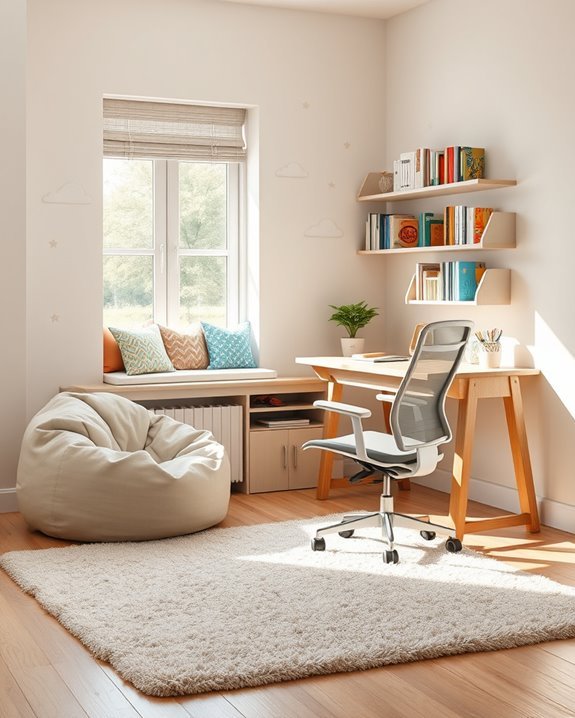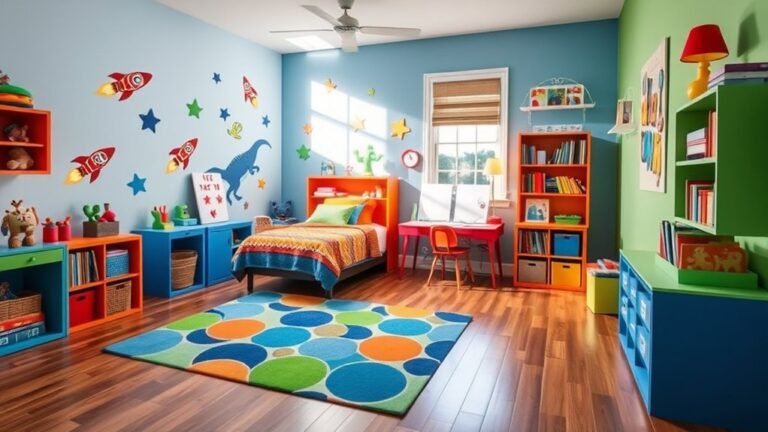
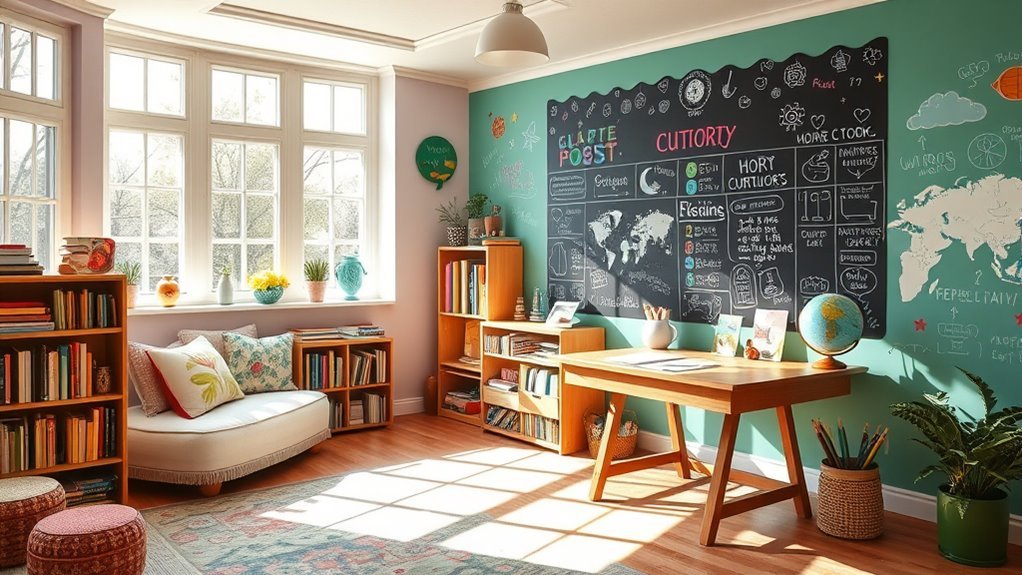
40 Functional Children Study Room Ideas That Encourage Learning
To create a fun and functional study room for your child, consider bright and cheerful color schemes to inspire creativity. Use multi-functional furniture to maximize space, and add creative wall art for motivation. An organized desk space fosters focus, while a cozy reading nook invites relaxation. Don’t forget a personal achievement display to celebrate successes and encourage independence. Explore seasonal decor changes for variety, and discover more ideas tailored to boost your child’s learning experience.
Bright and Cheerful Color Schemes

When you want to create a vibrant study room for your child, consider using bright and cheerful color schemes that inspire creativity and focus.
Choose vibrant palettes like sunny yellows and lively greens to energize the space. Pair these hues with cheerful accents, such as colorful artwork or playful rugs, to spark joy and imagination.
You might even use a feature wall in a bold shade to create a focal point.
Remember, the right colors can make your child feel more engaged in their studies, making learning enjoyable and productive.
Embrace those vibrant vibes for an inspiring environment!
Multi-Functional Furniture

Since space can often be limited in a child’s study room, incorporating multi-functional furniture is a smart choice.
Look for space saving solutions like convertible desks that adapt to your child’s needs. These desks can transform from a study area to a creative workspace in seconds, making them perfect for homework or art projects.
Consider storage ottomans that double as seating, helping keep clutter at bay while providing extra room for friends. A foldable table can also offer flexibility, allowing your child to use it for various activities without sacrificing valuable floor space.
These choices enhance functionality and encourage creativity!
Creative Wall Art

Incorporating creative wall art can transform a child’s study room into an inspiring space. You can choose whimsical murals that spark imagination, creating a vibrant atmosphere.
Think about themes like space exploration or underwater adventures to engage their curiosity. Educational decals are another fantastic option; they can teach concepts like the alphabet, numbers, or world maps in a fun, visually appealing way.
Organized Desk Space
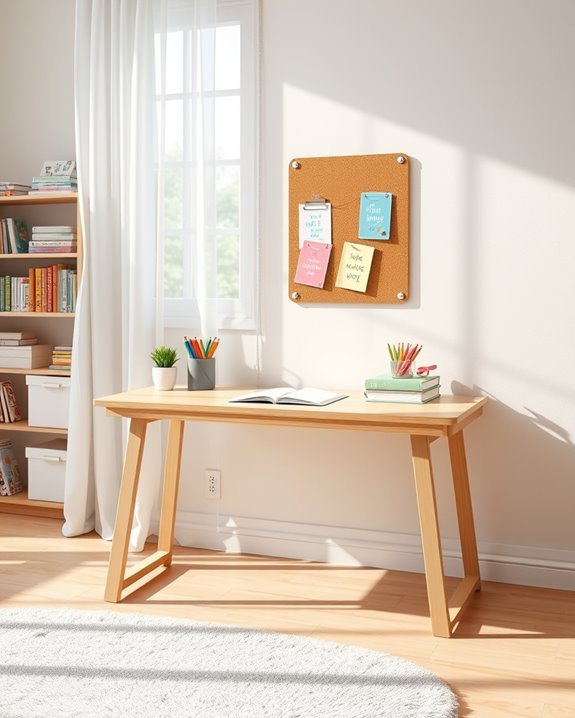
Creating an organized desk space is essential for fostering focus and productivity in your child’s study room. Start by decluttering the area; remove anything that’s not necessary for studying.
Use trays or drawer organizers for desk organization, keeping supplies like pens, notebooks, and gadgets easily accessible. Encourage your child to regularly assess their workspace and practice clutter management.
Label bins or sections to help them find items quickly. A clean and tidy desk not only enhances concentration but also instills good habits.
Cozy Reading Nook

A cozy reading nook can transform your child’s study room into a haven for imagination and relaxation.
Start by selecting a corner or alcove where you can add soft cushions and cozy blankets. This space should invite your child to curl up with their favorite reading materials.
Create a small bookshelf or basket to organize books, ensuring easy access to stories whenever inspiration strikes.
Consider adding a plush rug to enhance comfort and a small lamp for soft lighting during reading time.
With this cozy nook, your child will look forward to diving into new worlds through the magic of books.
Natural Lighting Solutions

Natural light can greatly enhance your child’s study room, making it a vibrant and inviting space. To optimize sunlight control, consider installing adjustable blinds or sheer curtains that filter light while reducing glare. This allows your child to enjoy natural illumination without distractions.
Position the desk near windows to take full advantage of daylight, promoting focus and energy efficiency. Incorporate reflective surfaces like mirrors to amplify the light, creating an airy atmosphere.
Inspirational Quotes

Incorporating inspirational quotes into your child’s study room can spark motivation and foster a positive mindset. Hang colorful prints featuring motivational phrases like “Believe in yourself” or “Mistakes are proof you’re trying.”
These learning affirmations remind your child that effort leads to growth. You can also encourage them to create their own quotes, personalizing their space and making it more meaningful.
Place these quotes where they’ll see them daily, like above their desk or on a bulletin board. This simple addition can transform their study environment, inspiring them to tackle challenges with enthusiasm and confidence.
Interactive Chalkboard Walls

Transforming a wall in your child’s study room into an interactive chalkboard can release their creativity and make learning more engaging.
Using chalkboard paint, you can create a large, writable surface that invites your child to express ideas and solve problems visually. This space becomes a canvas for interactive learning, where they can draw diagrams, jot down notes, or even work on math problems.
Encourage them to use different colors of chalk for categorizing subjects, making it a fun and dynamic environment.
With this setup, your child will look forward to studying and exploring new concepts every day.
Educational Posters

While you’re designing your child’s study room, consider adding educational posters that can spark curiosity and reinforce learning.
These visual aids can cover various educational themes, from the solar system to multiplication tables, making the space vibrant and engaging. By placing posters at eye level, you encourage your child to absorb information effortlessly.
Choose bright colors and interesting designs to captivate their attention. You can even rotate posters periodically to keep the environment fresh and stimulating.
Educational posters not only beautify the room but also serve as constant reminders of important concepts, making learning a fun and interactive experience.
Personalized Study Zones

Creating a study environment that reflects your child’s unique interests can greatly enhance their learning experience.
Start with custom study designs that cater to their preferences, whether it’s a favorite color scheme or a specific theme. Incorporate tailored decor, like personalized wall art or a cozy reading nook, to make the space inviting.
Use flexible furniture that adapts to their needs, ensuring comfort during study sessions. Add motivational quotes or images that inspire them.
Technology Integration

Incorporating technology into your child’s study room can markedly enhance their learning experience, making it more interactive and engaging.
Consider integrating digital tools that support virtual learning, enabling your child to access online resources easily.
Utilize coding resources and educational apps that spark interest in STEM subjects.
Encourage the use of interactive software for creating multimedia presentations, fostering creativity and critical thinking.
Facilitate online collaboration with peers through various platforms, enhancing teamwork skills.
Finally, provide access to tech tutorials, empowering your child to explore and master new technologies, ultimately preparing them for a digital future.
Adjustable Shelving

Adjustable shelving can transform your child’s study room into a flexible and organized space. With adjustable height options, you can easily customize the shelves as your child grows, ensuring that books and supplies are always within reach.
Incorporate shelf accessories like bins and organizers to keep items tidy and accessible, making study sessions more efficient. This adaptability not only promotes a sense of responsibility but also encourages your child to maintain an orderly environment.
Comfortable Seating Options

Choosing the right seating can make a significant difference in your child’s study room.
Consider adding bean bag chairs for a cozy, relaxed vibe that invites reading and creativity. They’re easy to move around, allowing your child to find their perfect spot.
Alternatively, ergonomic stools provide excellent support for longer study sessions, encouraging good posture and focus. These stools often come in adjustable heights, making them versatile for growing kids.
Study Stations for Multiple Children

Creating study stations for multiple children can enhance collaboration and productivity in a shared study room. By setting up dedicated sibling study zones, you promote a focused environment while allowing each child to work at their own pace.
Use dividers or different colors to delineate each space, making it visually appealing and organized. Guarantee each station is equipped with essential supplies like books, stationery, and tech devices.
Encourage teamwork by incorporating shared study spaces where they can work together on projects. This setup not only fosters independence but also nurtures communication skills and a love for learning among siblings.
Nature-Inspired Decor

Incorporating nature-inspired decor into your children’s study room can transform the space into a calming and stimulating environment.
Consider adding nature themed artwork, like vibrant landscapes or animal prints, to spark their imagination. Use earthy colors and natural materials, such as wood or stone, to create a warm atmosphere.
You can also include plants that are easy to care for, promoting a connection to the outdoors. Encourage outdoor learning by creating an area for nature journals or science projects.
This decor not only beautifies the room but also fosters creativity and a love for the environment, enhancing their overall learning experience.
Minimalist Design Approach

While a cluttered space can distract, a minimalist design approach in your children’s study room fosters focus and productivity. By simplifying the decor and keeping only essential items, you create a tranquil, clutter-free environment that encourages learning.
Choose a clean color palette and functional furniture to establish a minimalist workspace where your child can thrive. Limit distractions by incorporating only the necessary tools and supplies, ensuring everything has its place.
This intentional reduction not only enhances concentration but also teaches kids the value of simplicity. Embrace minimalism to cultivate an inspiring atmosphere that supports their educational journey.
Functional Storage Solutions

Since a well-organized study room can greatly enhance your child’s productivity, incorporating functional storage solutions is key.
Start by using creative storage options like under-bed bins or wall-mounted shelves to maximize space. Consider multi-functional furniture, such as desks with built-in drawers, to keep supplies handy yet out of sight.
Label boxes and baskets to encourage your child to maintain order. Use pegboards for easy access to art supplies or tools, allowing for quick clean-up.
Themed Study Rooms

Creating a themed study room can spark your child’s imagination and make learning more enjoyable. By incorporating themed decor, you can transport your child to different worlds, whether it’s a space adventure or an enchanted forest.
These themes can motivate them to tackle study challenges with enthusiasm. Consider using colors, artwork, and furniture that align with the chosen theme, making the space visually appealing and engaging.
This connection between the decor and learning can enhance focus and creativity, turning study time into an exciting experience. Ultimately, a well-designed themed study room can inspire your child to explore and excel in their studies.
DIY Study Room Projects

Transforming a study space can be even more rewarding when you get hands-on with DIY projects. Start by creating DIY wall mounted organizers; they’ll help keep supplies tidy and accessible. You can use repurposed materials like wooden crates or old shelves to add a unique touch.
Next, consider making DIY colorful bulletin boards to inspire creativity and organization. Use vibrant fabrics or paper to brighten the walls and encourage your child to pin up important reminders, artwork, or goals.
These projects not only enhance functionality but also allow your child to personalize their study area, making learning more enjoyable.
Soundproofing Ideas

When it comes to studying, a quiet environment can make all the difference. To create that peaceful space, consider installing acoustic panels on the walls. These panels absorb sound and reduce distractions, helping your child focus better.
Additionally, you can hang soundproof curtains over windows to block outside noise. Choose thick, heavy fabrics for the best results.
By combining these soundproofing ideas, you’ll transform the study room into a serene haven, allowing your child to dive deep into their work without interruptions.
With a few simple changes, you can greatly enhance their learning experience.
Visual Learning Tools

A quiet study room sets the stage for effective learning, but incorporating visual learning tools can elevate your child’s study experience even further.
Consider using visual aids like charts, maps, and flashcards to reinforce concepts and make studying more engaging. Infographic displays can simplify complex information, turning it into digestible visuals that spark curiosity.
You might also hang educational posters that relate to subjects your child is studying, creating an inspiring atmosphere.
Color-Coded Supplies

Color-coded supplies can greatly enhance your child’s study organization and efficiency. By implementing color coordination techniques, you can help your child easily identify and access their materials.
For example, assign different colors for subjects: blue for math, red for science, and green for reading. This aligns with current supply organization trends, making study time more streamlined.
Encourage your child to organize their folders, notebooks, and stationery in these colors. Not only does this foster independence, but it also reduces time spent searching for items, allowing your child to focus more on learning and less on clutter.
Task Lighting Options

How can you guarantee your child’s study space is well-lit for ideal focus? Start by exploring various task lighting styles, like desk lamps, floor lamps, or clip-on lights. Each style offers unique benefits, so choose what suits your child’s needs best.
For effective task lighting placement, position the light source to minimize shadows on their workspace, ensuring they can read and write comfortably. Aim for adjustable lighting to cater to different activities, whether it’s reading, writing, or crafting.
With the right task lighting, your child will enjoy a bright, inspiring environment that enhances their learning and concentration.
Modular Furniture

Creating a well-lit study space sets the stage for effective learning, but the furniture you choose can further enhance your child’s productivity.
Modular furniture is a fantastic option, offering flexibility and space efficiency. With modular design, you can easily rearrange pieces to fit your child’s changing needs, whether it’s for studying, crafting, or relaxing.
Consider desks with adjustable heights and shelves that can be reconfigured. This adaptability not only maximizes the room’s functionality but also encourages your child to take ownership of their space.
Investing in modular furniture makes learning comfortable, engaging, and tailored to their unique style.
Collaborative Workspaces

While individual study areas are important, incorporating collaborative workspaces can greatly enhance your child’s learning experience.
These spaces encourage teamwork and creativity, making them perfect for team projects and group brainstorming sessions. Set up a large table where your child and their friends can gather, share ideas, and work together.
Include whiteboards or bulletin boards for visual brainstorming and easy collaboration. Comfortable seating will keep them engaged during long study sessions.
Vintage Study Room Elements

Incorporating vintage study room elements can add character and charm to your child’s learning environment. Consider adding a sturdy vintage desk that not only serves as a functional workspace but also sparks curiosity.
Pair it with an antique globe to ignite a sense of adventure and exploration. These timeless pieces can create a warm, inviting atmosphere that encourages learning.
You might also include vintage bookends or a classic bookshelf to display treasured books. By blending these elements, you’ll foster a unique space where your child feels inspired to study and grow, while appreciating the beauty of the past.
Incorporating Plants

Adding plants to your child’s study room can transform the space into a vibrant and inviting oasis.
Consider incorporating low-maintenance plant types like snake plants or pothos, which thrive indoors and enhance air purification. These plants not only improve air quality but also create a calming atmosphere, helping your child focus better.
Place them on shelves, desks, or window sills to bring life to the room. Encourage your child to care for the plants, fostering responsibility and a love for nature.
With the right plants, you’ll create an inspiring environment that promotes learning and creativity.
Homework Help Corner

Creating a dedicated Homework Help Corner in your child’s study room can greatly enhance their focus and productivity. Set up a comfortable desk, good lighting, and a few organizational tools.
Use this space to discuss homework tips, helping them understand how to break tasks into manageable parts. Encourage them to create study schedules that align with their assignments, promoting time management skills.
You might also add a bulletin board for reminders and motivational quotes. This corner becomes a go-to spot for tackling schoolwork, making it easier for your child to stay on track and feel supported during their study sessions.
Unique Book Storage

Transforming your child’s study room with unique book storage can’t only keep books organized but also make the space more inviting.
Consider using creative shelving that adds personality, like whimsical wall-mounted bookcases shaped like trees or clouds. This not only showcases books but also sparks your child’s imagination.
Implement thematic organization by grouping books by genre or color, creating a visually appealing display that encourages reading. You might even incorporate bins or baskets for smaller items, making it easy for your child to access their favorite stories.
With these ideas, you’ll inspire a love for learning while keeping the space neat.
Playful Study Accessories

Once you’ve organized your child’s books, it’s time to enhance the study space with playful study accessories that spark creativity and make learning enjoyable.
Consider adding playful desk accessories like colorful pencil holders or fun-shaped erasers that can brighten up the workspace. Whimsical stationery, featuring characters or vibrant designs, can make note-taking and assignments more exciting.
You might also include a chalkboard or whiteboard for doodling ideas or jotting down reminders. These elements not only add flair to the study area but also encourage your child to engage with their learning materials in a more dynamic way.
Educational Games Corner

An educational games corner can be a fantastic addition to your child’s study room, providing a fun way to reinforce learning.
Choose a diverse game selection that caters to various subjects like math, science, and language arts. Incorporate interactive activities, such as puzzles, board games, or educational apps, to engage their minds and encourage critical thinking.
Set up a cozy nook with comfortable seating and easy access to materials, making it an inviting space for exploration.
Wall-Mounted Organizers

To maximize space and keep the study area organized, consider incorporating wall-mounted organizers into your child’s study room. Wall-mounted shelves are perfect for storing books, supplies, and even decorative items.
You can mix practicality with creativity by using functional artwork as organizers. For instance, choose art pieces that double as storage, like a colorful bulletin board or a magnetic wall for notes. This approach not only saves floor space but also adds visual interest.
Tech-Free Zones

Creating tech-free zones in your child’s study room can greatly enhance focus and productivity. By designating specific areas without screens, you encourage a digital detox that fosters concentration.
Fill these zones with engaging, screen-free activities like puzzles, books, or art supplies. This approach not only sparks creativity but also helps your child develop a love for learning without distractions.
Encourage them to explore new hobbies or practice mindfulness in these designated spaces. With fewer digital distractions, your child can dive deeper into their studies, making the study room a sanctuary for growth and discovery.
Flexible Layouts

After establishing tech-free zones, it’s time to contemplate how flexible layouts can further enhance your child’s study experience.
By incorporating creative layouts, you can create adaptable spaces that cater to your child’s changing needs. Consider movable furniture, like desks and chairs, that allow them to switch between sitting and standing.
Add areas for collaboration with friends or quiet corners for focused work. This versatility not only keeps the environment fresh but also encourages your child to engage actively in their learning.
Ultimately, designing a room with flexible layouts can spark creativity and foster a love for studying.
Fun Rug Designs

While your child dives into their studies, adding fun rug designs can transform the atmosphere of their study space.
Opt for playful patterns that spark creativity, like animals, geometric shapes, or vibrant colors. These designs not only brighten the room but also make learning more enjoyable.
Combine them with soft textures to create a cozy spot where your child can sit, read, or work on projects comfortably. A plush rug can reduce distractions, encouraging focus and productivity.
With the right rug, you’re not just decorating; you’re fostering an inviting environment that supports your child’s educational journey.
Growth Charts
As your child grows, incorporating a growth chart into their study room can be both practical and decorative. It’s a fun way to visually mark growth milestones and keep track of their height over the years.
Choose a design that complements the room’s theme, whether it’s a whimsical animal or a sleek, modern style. Place the chart at their eye level to encourage regular height tracking.
This simple addition not only creates a personal touch but also fosters a sense of achievement as they see their progress. Celebrate each milestone together, making memories while nurturing their love for learning.
Family Learning Wall

A growth chart isn’t just for tracking height; it can inspire a love for learning in your child’s study space.
Create a family learning wall filled with engaging visuals, including charts, maps, and your child’s artwork. This wall can serve as a central hub for important learning resources and a reminder of family activities that promote education.
Use it to display books, puzzles, or inspirational quotes that spark curiosity. Regularly update the wall together, making it a fun family activity.
Encourage your child to add their favorite materials, fostering pride in their learning environment and a passion for knowledge.
Seasonal Decor Changes

Changing the decor in your child’s study room with the seasons can keep their space fresh and inspiring. Embrace seasonal themes by swapping out decorations to reflect what’s happening outside.
For spring, add floral prints and pastel colors. In summer, incorporate bright hues and beach-themed items. As autumn approaches, use warm colors and festive decorations like pumpkins or leaves.
Winter can be adorned with cozy textures and holiday motifs. These simple adjustments not only enhance the room’s aesthetic but also create a joyful atmosphere that encourages learning and creativity throughout the year, making study time feel more inviting.
Personal Achievement Display

Incorporating a personal achievement display in your child’s study room can serve as a powerful motivator. Create an achievement wall that showcases their accomplishments—whether it’s art projects, academic awards, or certificates.
This visual representation of success can boost their confidence and inspire them to set new goals. You might also consider adding a trophy display for any sports or extracurricular achievements.
Encouraging Independence

While fostering independence in your child’s study room, you can create an environment that encourages self-directed learning.
Start by providing a well-organized space where they can access supplies easily, promoting self-sufficiency skills. Incorporate a designated area for projects, allowing them to explore their interests.
Give your child decision-making opportunities, like choosing study materials or setting a schedule. This not only builds confidence but also helps them take charge of their learning journey.
Conclusion
Incorporating these 40 functional ideas into your child’s study room can truly enhance their learning experience. By using bright colors, multi-functional furniture, and personalized decor, you’ll create an inviting space that encourages creativity and independence. Don’t forget to keep the area organized and include cozy spots for reading. With a little effort, you can transform the study room into a dynamic environment that inspires your child to explore, learn, and thrive.