

40 Inspiring Dream Vegetable Garden Ideas for Fresh Homegrown Produce
Transform your outdoor space into a vibrant haven for fresh produce with innovative vegetable garden ideas. Consider raised bed gardens for better soil management, vertical solutions for maximizing growing areas, and unique container gardening options for smaller spaces. Don’t forget to incorporate companion planting techniques that promote healthy growth and attract beneficial insects. Create stunning visuals with colorful herbs and seasonal plantings. Keep exploring to uncover even more inspiring strategies for your dream vegetable garden!
Raised Bed Vegetable Gardens
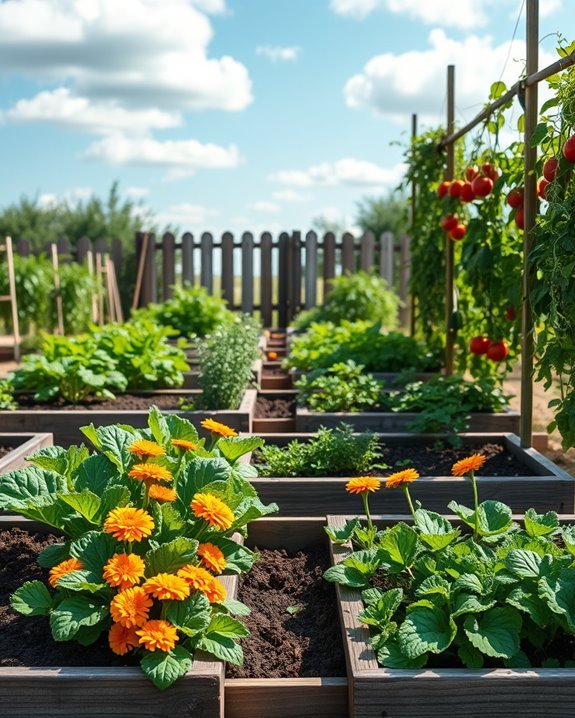
If you want to maximize your gardening space and make maintenance easier, raised bed vegetable gardens are a fantastic option. They allow for better soil amendments, ensuring ideal plant nutrition.
With proper garden planning, you can implement effective pest management strategies and perfect crop spacing. Use drip irrigation to conserve water and promote healthy growth. Equip yourself with the right garden tools to streamline your efforts.
Consider planting seasonal crops alongside companion herbs to enhance growth and deter pests. This approach simplifies garden maintenance, making it easier for you to enjoy your fresh homegrown produce throughout the year.
Vertical Gardening Solutions
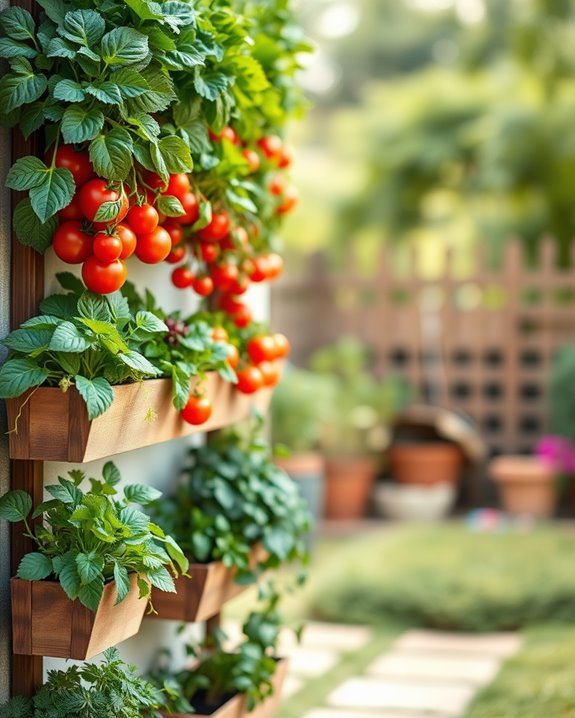
Raised bed vegetable gardens are a great start, but if you’re limited on space, vertical gardening solutions can take your gardening game to the next level.
With vertical gardening designs, you can maximize your growing area while adding visual interest to your garden. You’ll enjoy vertical gardening benefits like improved air circulation, easier pest management, and reduced strain on your back.
Consider using wall planters, trellises, or even repurposed pallets for an innovative approach. Not only will you grow fresh produce, but you’ll also create a stunning green display that’ll inspire your neighbors and elevate your gardening experience.
Companion Planting Techniques

Companion planting techniques can greatly enhance the health and productivity of your vegetable garden. By understanding plant relationships, you can create nutrient partnerships that boost growth harmonies and yield enhancement.
For example, pairing companion herbs like basil with tomatoes not only improves flavor but also acts as pest deterrents, reducing pest attraction. Proper plant spacing guarantees crop compatibility, allowing plants to thrive without competition.
Embracing biodiversity benefits, you’ll create a more resilient garden ecosystem. Experiment with different combinations and observe the effects, as these relationships can transform your vegetable garden into a flourishing haven of fresh produce.
Herb Spiral Gardens
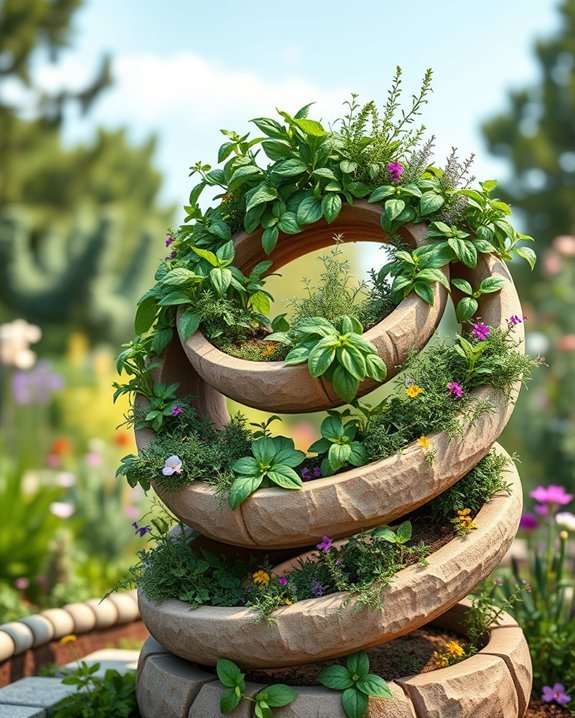
Creating an herb spiral garden is a fantastic way to maximize space and grow a variety of herbs in a compact design.
The herb spiral benefits include easy accessibility, sustainable irrigation, and enhanced aesthetics.
When planning your herb spiral design, consider ideal placement to guarantee sunlight and shelter.
Incorporate diverse herb spiral plants, like basil, thyme, and rosemary, to create a thriving ecosystem.
Herb spiral maintenance is minimal, requiring regular watering and occasional pruning.
Embrace herb spiral creativity by adding decorative stones or pathways, making your garden not just functional but visually appealing too.
Enjoy the journey of homegrown freshness!
Hydroponic Vegetable Gardens

While traditional gardening relies on soil, hydroponic vegetable gardens offer a soil-free alternative that can revolutionize your growing experience.
By utilizing hydroponic systems, you can control nutrient solutions and guarantee peak pH management for your plants. Incorporating grow lights enhances growth, while effective water circulation promotes health.
With various plant varieties to choose from, you can maximize yield optimization and space efficiency. Embrace climate control to create the perfect environment for your crops, allowing for year-round gardening.
Whether you’re selecting herbs or leafy greens, hydroponics makes growing fresh produce easier and more efficient than ever.
Indoor Vegetable Gardening

Indoor vegetable gardening allows you to cultivate fresh produce right in your own home, making it a practical option for those with limited outdoor space.
Choose the right container materials and soil selection to optimize growth. Utilize indoor lighting to guarantee your plants receive adequate light, while managing temperature control and humidity levels for a healthy environment.
Explore various plant varieties that thrive indoors, and implement effective watering techniques to keep them nourished. Don’t forget about pest management and crop rotation to maintain soil health.
With careful planning and space optimization, you can enjoy a thriving indoor garden year-round.
Permaculture Garden Designs

When you embrace permaculture garden designs, you create a sustainable ecosystem that benefits both your plants and the environment.
By applying permaculture principles, you enhance soil health and implement effective water management strategies. Incorporating native plants boosts biodiversity benefits and attracts beneficial insects, while regenerative practices promote sustainable yields.
Establishing a food forest allows for companion ecosystems to thrive, maximizing your garden’s productivity. You’ll experience the joy of harvesting fresh produce while supporting ecosystem services that nurture the land.
With careful planning, your permaculture garden can flourish, proving that sustainable gardening isn’t just possible, it’s rewarding.
Edible Landscaping Ideas
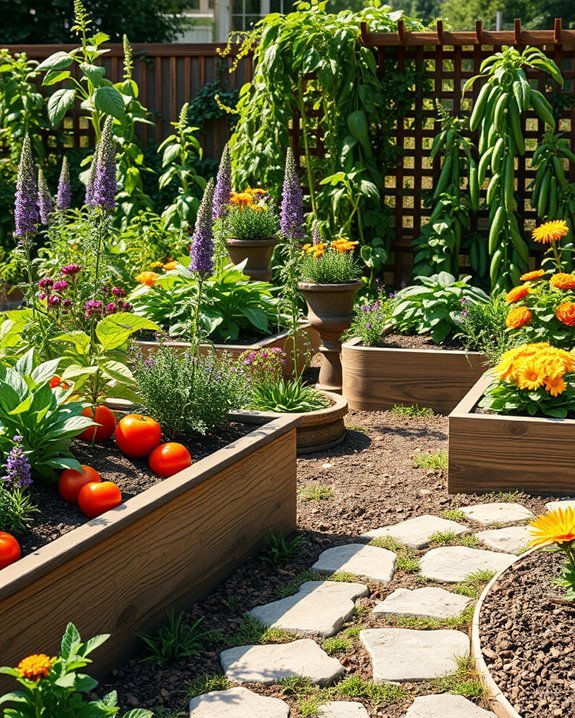
If you want to transform your outdoor space into a beautiful and functional area, consider incorporating edible landscaping ideas.
Plant edible flowers, like nasturtiums and pansies, to enhance your garden aesthetics while attracting pollinators. Integrate fruit trees that provide shade and delicious produce.
Use native plants to improve soil health and support local wildlife. Pair companion herbs with your vegetables to boost growth and deter pests.
Thoughtful landscape design can create visual appeal while offering biodiversity benefits. This way, you’ll enjoy a vibrant garden that not only looks stunning but also yields fresh, homegrown produce right outside your door.
Cottage Garden Vegetable Mix
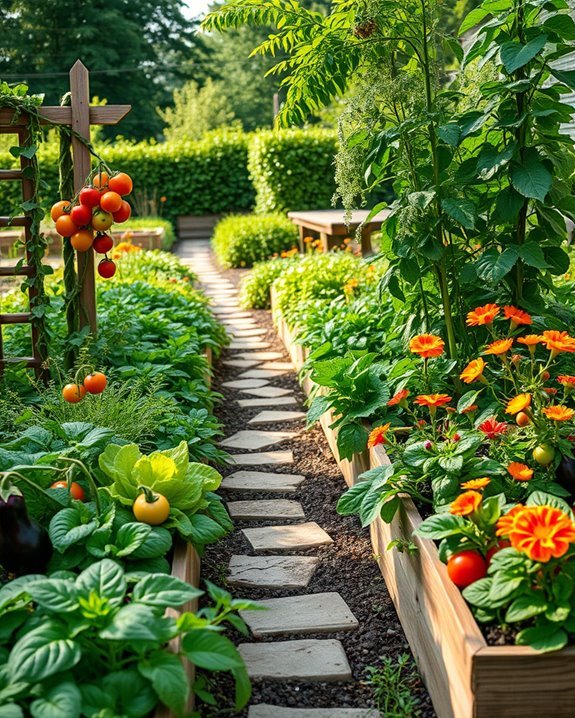
Creating a cottage garden vegetable mix not only adds charm to your outdoor space but also provides you with a variety of fresh produce.
Imagine vibrant tomatoes nestled among fragrant herbs, with colorful seasonal blooms enhancing the cottage aesthetics. You can combine leafy greens, root vegetables, and climbing beans to create a lush tapestry.
Interplanting flowers like marigolds or nasturtiums not only beautifies your garden but also attracts pollinators.
Embrace the whimsy of cottage gardening by allowing plants to spill and mingle, creating a relaxed, inviting atmosphere while reaping the benefits of homegrown vegetables throughout the seasons.
Traditional Row Gardening
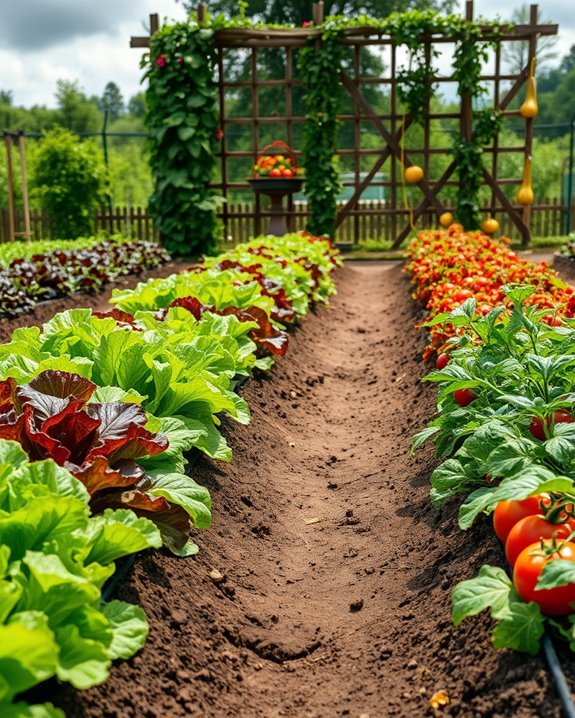
Traditional row gardening offers a structured approach to growing your vegetables, allowing you to maximize space and improve accessibility.
By planting in rows, you can easily manage crop spacing, ensuring each plant has enough room to thrive. Start with proper soil preparation: test your soil, amend it with organic matter, and till it to create a loose, fertile environment.
Once your rows are set, you can plant a variety of vegetables, making it simple to tend and harvest. This method not only promotes healthy growth but also provides a visually appealing garden that’s both functional and organized.
Enjoy your bountiful harvest!
Community Garden Projects

Have you ever considered how community garden projects can transform neighborhoods and foster connections? By embracing community collaboration, you can participate in group gardening that not only beautifies your area but also cultivates friendships.
These projects often host garden workshops, allowing you and your neighbors to learn sustainable practices together. With shared resources, everyone can grow local produce while supporting each other’s efforts.
Community outreach initiatives can involve educational programs that inspire future generations about gardening. So, get involved and reap the benefits of fresh produce, enriched relationships, and a greater sense of community in your neighborhood.
Family-Friendly Gardening

Whether you’re a seasoned gardener or just starting out, family-friendly gardening offers a fantastic way to bond with your loved ones while cultivating a green thumb.
Engage in fun gardening activities like planting kid-friendly plants and setting family garden goals together. You can organize family workshops to teach essential skills and introduce educational gardening concepts.
Incorporate gardening games to make the experience enjoyable and foster teamwork gardening. Celebrate your gardening rewards by sharing the fruits of your labor, and don’t forget to weave in some garden storytelling to inspire creativity and connection among family members.
Enjoy every moment in your garden!
Pollinator-Friendly Vegetable Gardens
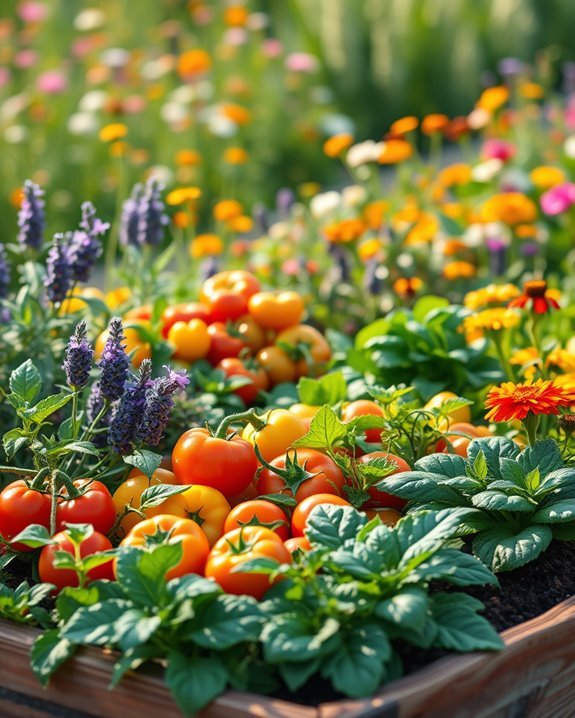
Engaging in family-friendly gardening can naturally lead you to create a pollinator-friendly vegetable garden that not only nourishes your family but also supports local ecosystems.
Incorporate native plantings to attract sustainable pollinators, ensuring your garden thrives. Include bee-friendly blooms and butterfly gardens to enhance pollinator habitats, while creating wildlife corridors for various species.
By designing a space that encourages these crucial creatures, you’ll boost your vegetable yields and contribute to biodiversity.
Remember, a vibrant garden filled with color and life isn’t just beautiful; it’s essential for maintaining the delicate balance of our environment.
Happy gardening!
Urban Gardening Innovations

As cities expand and green spaces shrink, urban gardening innovations are becoming essential for city dwellers looking to grow their own food.
You can transform rooftops into lush urban rooftop gardens, utilizing vertical space to cultivate a variety of vegetables and herbs. These gardens not only beautify the skyline but also help reduce urban heat and improve air quality.
Joining community gardening initiatives can also provide you with resources, knowledge, and camaraderie. Collaborating with neighbors allows you to share tips, tools, and harvests, creating a vibrant local food network that fosters sustainability and a sense of community.
Garden Pathways and Layouts
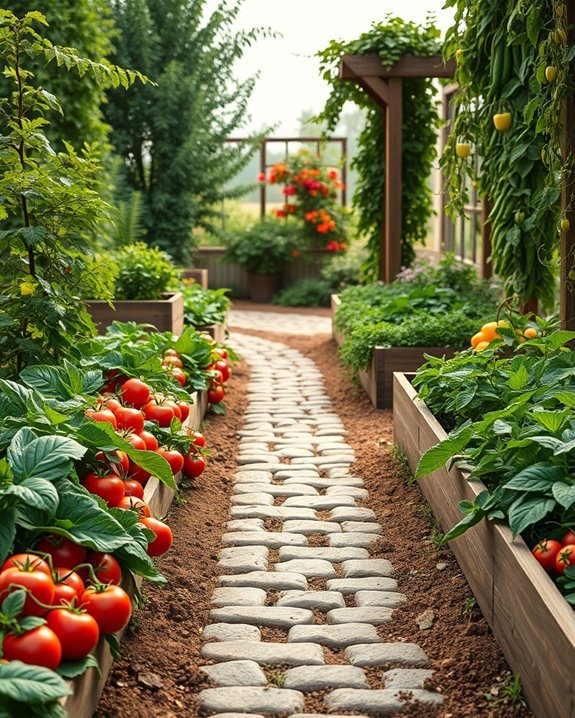
Creating a functional and inviting vegetable garden goes beyond just selecting plants; the layout and pathways play a significant role in your gardening experience.
Choose garden path materials like gravel or stone to create aesthetic pathways that enhance your garden’s charm. Consider layout designs that promote garden space optimization, ensuring easy access to all your plants.
Functional walkways should guide you through your garden, making maintenance a breeze while allowing you to showcase your hard work.
Sustainable Gardening Practices

Low-maintenance vegetable gardens can easily incorporate sustainable gardening practices, which not only benefit the environment but also enhance your garden’s productivity.
Start by using composting techniques to recycle kitchen scraps and yard waste, enriching your soil with nutrients. This reduces landfill waste while providing your plants with a healthy boost.
Additionally, practice water conservation by installing drip irrigation systems or rain barrels to collect runoff. Mulching around your plants helps retain moisture, reducing the need for frequent watering.
Climate-Adapted Vegetable Gardens
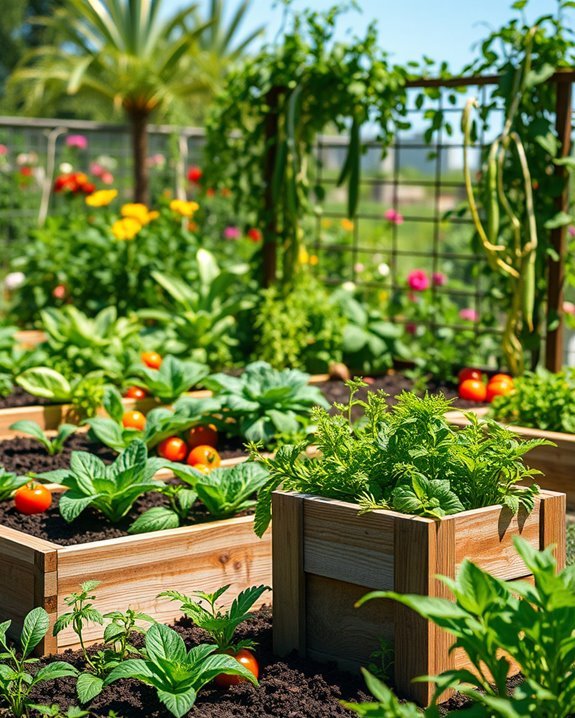
If you want to create a thriving vegetable garden, adapting it to your local climate is essential.
Start by understanding your climate zone and choosing native plants that thrive in your area. Incorporate seasonal adaptations, such as selecting heat-loving vegetables for summer and frost protection methods for winter.
Focus on soil amendments to boost nutrient content and enhance moisture management. Prioritize drought tolerance by selecting resilient varieties that withstand dry spells.
Finally, consider pest resistance strategies to protect your garden. By aligning your garden with climate conditions, you’ll cultivate a productive and resilient vegetable garden that flourishes year-round.
Greenhouse Vegetable Gardening
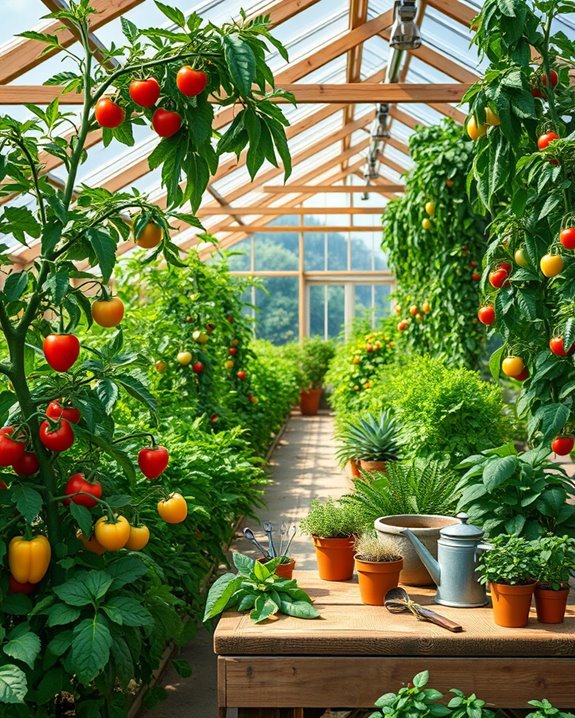
Greenhouse vegetable gardening provides an excellent alternative for those looking to extend their growing season and optimize plant growth.
By selecting the right greenhouse materials, you can enhance temperature control and guarantee your plants thrive year-round.
Implementing effective pest management strategies and understanding light requirements are essential for success.
Hydroponic technology can further boost your crop selection, allowing for diverse options.
Guarantee proper ventilation systems are in place to maintain a healthy environment.
With diligent seed propagation, tailored nutrient solutions, and consistent maintenance routines, you’ll enjoy a bountiful harvest of fresh vegetables right from your greenhouse.
Shade Garden Ideas
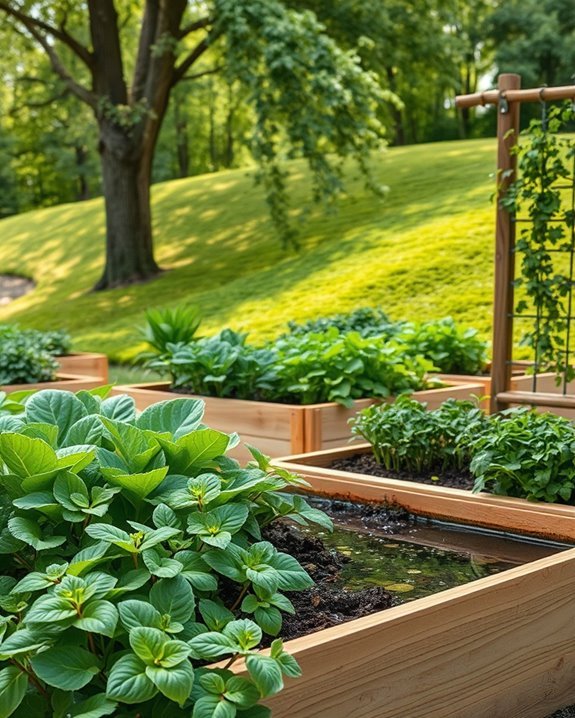
Have you ever wondered how to transform a shaded area of your yard into a lush, productive garden?
You can create a stunning shade garden by choosing the right shade loving plants that thrive in lower light conditions. Consider incorporating cool climate vegetables like leafy greens, radishes, and peas. These plants not only tolerate shade but also flourish in the cooler temperatures often found in such spots.
Mix in some colorful perennials and ferns to add visual interest. With the right selection, your shaded garden can become a vibrant oasis, yielding fresh produce while making the most of those less sunny areas.
Multi-Functional Garden Spaces
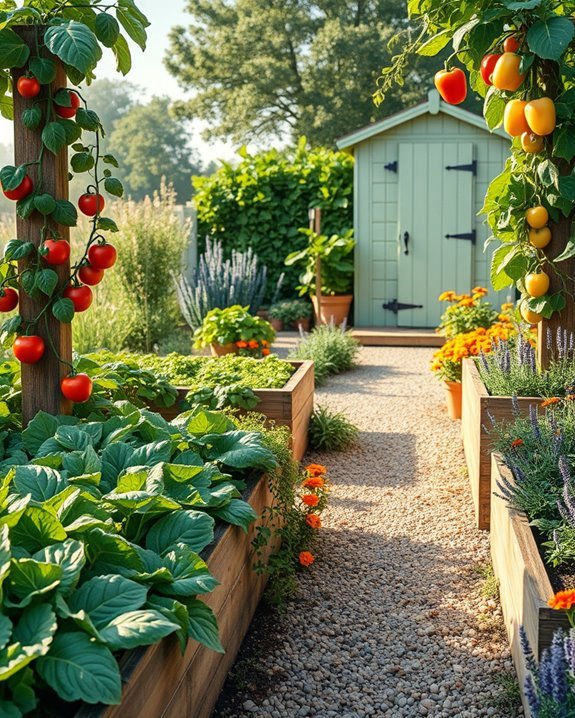
While designing your garden, consider how multi-functional spaces can maximize both utility and enjoyment.
Imagine combining edible flowers and garden art to create a vibrant pollinator garden that attracts bees and butterflies. Add garden seating for relaxation, and include composting areas to recycle kitchen waste.
Designate play spaces for kids and incorporate sensory paths with aromatic herbs and textured plants. For culinary enthusiasts, an outdoor kitchen enhances meal prep, while rainwater harvesting systems help sustain your plants.
Fruit and Vegetable Combo Gardens

Combining fruits and vegetables in your garden can lead to a vibrant and productive space. Consider pairing fruit trees with seasonal vegetable plantings for ideal harvest timing.
Use companion blooms to attract pollinators, enhancing both yields and garden aesthetics. Thoughtful color combinations can make your garden visually appealing while supporting soil health through diverse root systems.
Embrace sustainable practices by rotating crops and planting according to seasonal cycles. This synergy not only boosts productivity but also creates a thriving ecosystem, where vegetable pairings and fruit trees work together harmoniously to provide fresh, homegrown produce all year round.
Medicinal Herb Gardens

If you’re looking to enhance your garden’s functionality, consider creating a medicinal herb garden.
These gardens can provide you with an array of plants known for their medicinal properties. You can grow herbs like rosemary, chamomile, and peppermint, which have been used for centuries as herbal remedies.
By cultivating these plants, you’ll not only enjoy their beauty but also have access to natural solutions for common ailments.
Whether you’re brewing teas for relaxation or using herbs in cooking, a medicinal herb garden can be a valuable addition to your home.
Embrace the power of nature and start your healing journey today!
Crop Rotation Techniques

Crop rotation techniques are crucial for maintaining soil health and maximizing your garden’s productivity.
By implementing seasonal crop planning and crop diversity benefits, you can improve nutrient cycling methods and enhance fertility.
Coordinate your planting schedules to guarantee that different crops follow each other, allowing for effective pest management practices and disease resistance cultivation.
Utilize companion crop selection to further boost yield optimization strategies.
These techniques not only promote soil health improvement but also foster a thriving ecosystem in your garden.
Embracing these methods means you’ll enjoy fresh produce while supporting the long-term vitality of your soil.
Small Garden Design Inspirations
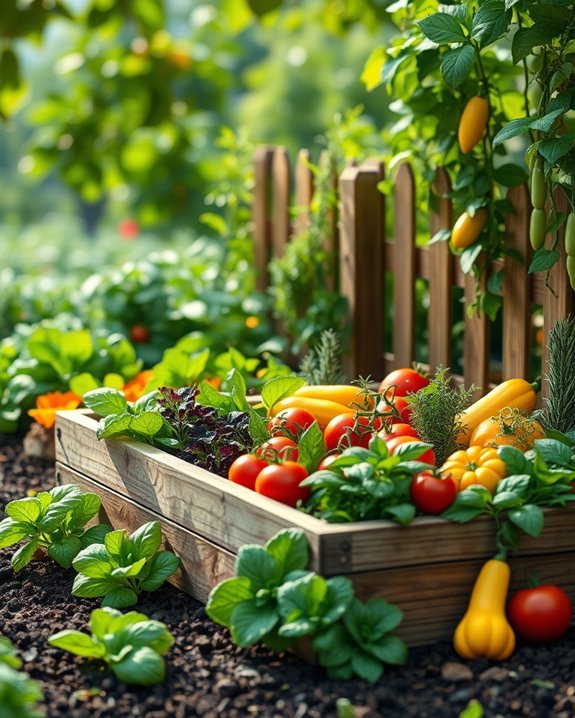
While you might think a small garden limits your possibilities, it actually opens the door to creative design solutions that maximize your space.
Embrace bold garden color schemes to create visual interest, using vibrant flowers alongside your vegetables. Consider innovative plant pairings; for instance, tomatoes and basil not only thrive together but also enhance each other’s flavors.
Vertical gardening techniques, like wall planters or trellises, can add dimension and utilize height. Don’t forget to incorporate paths or stepping stones to navigate your garden easily, making it a peaceful retreat for you to enjoy your fresh homegrown produce.
Companion Flowers for Vegetables

Incorporating companion flowers into your vegetable garden can enhance both aesthetics and productivity. These vibrant blooms attract pollinator partners, improving your garden’s biodiversity benefits.
Varieties like marigolds and nasturtiums serve as pest deterrents, while their colorful presence adds visual appeal. You’ll love how color coordination creates a harmonious look, and seasonal blooms bring life throughout the year.
Aromatic companions, such as basil and lavender, can enhance growth and deter pests, promoting soil improvement.
Conclusion
Now that you’ve explored these 40 inspiring vegetable garden ideas, it’s time to get started on your own fresh, homegrown produce. Whether you choose raised beds, vertical solutions, or unique containers, there’s a perfect option for every space. Don’t forget to experiment with companion planting and seasonal guides to maximize your harvest. Embrace your creativity and make your garden a thriving oasis of flavor and beauty. Happy gardening!


