

40 Easy Cucumber Garden Ideas to Grow Fresh Produce at Home
To grow fresh cucumbers at home, start by choosing the right varieties, like ‘Marketmore 76’ or ‘Burpless’, based on your taste and growing conditions. Prepare your soil with compost and guarantee good drainage. Don’t forget container gardening for small spaces or vertical techniques to save ground area. Incorporate companion planting with radishes or beans to naturally deter pests. From clever storage to fun garden crafts, there’s a lot more you can explore for a successful cucumber harvest!
Container Gardening for Cucumbers

If you want to enjoy fresh cucumbers but lack garden space, container gardening is a fantastic solution.
Start by choosing the right container materials—opt for pots made of plastic, wood, or ceramic, ensuring they’ve drainage holes. For potting techniques, use a lightweight potting mix rich in nutrients. Fill your container, leaving space for your cucumber plants to grow.
Stick to one or two plants per container to avoid overcrowding. Remember to water regularly and provide support as your cucumbers grow. With the right care, you’ll soon be harvesting delicious cucumbers right from your balcony or patio!
Storing Fresh Cucumbers

To keep your fresh cucumbers crisp and flavorful, store them properly as soon as you bring them home.
Use cucumber storage methods like placing them in a plastic bag with a few holes for ventilation. This helps maintain moisture while preventing spoilage.
Keep your cucumbers in the refrigerator’s crisper drawer, as the ideal cucumber temperature is between 50°F and 55°F.
Avoid storing them near ethylene-producing fruits like apples and bananas, as this can cause them to spoil faster.
Pickling Cucumbers for Preservation

While summer’s bounty of cucumbers may be fleeting, pickling them offers a fantastic way to enjoy their crunch and flavor long after the harvest. Start by selecting fresh, firm pickling cucumbers for the best results.
Explore various pickling techniques, such as quick pickling or traditional canning. You’ll want to prepare a simple brine recipe using vinegar, water, salt, and your favorite spices.
Pour the brine over your cucumbers in sterilized jars, seal them tightly, and refrigerate or process for longer storage. Soon, you’ll have delicious pickles ready to enhance your meals or serve as snacks throughout the year!
Creative Ways to Use Cucumbers in Meals

When it comes to adding novelty to your meals, cucumbers are a versatile ingredient that can elevate any dish. You can whip up invigorating cucumber appetizers, like crisp cucumber bites topped with hummus or smoked salmon.
For a light salad, toss sliced cucumbers with tomatoes, feta, and a drizzle of olive oil.
Don’t forget about cucumber desserts! Try making a revitalizing cucumber sorbet or adding diced cucumbers to a fruit salad for a unique twist.
With these ideas, you’ll enjoy the crunchy goodness of cucumbers in delightful and creative ways throughout your meals.
Companion Planting With Herbs

Cucumbers not only enhance your meals but also thrive in a garden alongside various herbs.
When you choose herbs like basil, dill, and cilantro, you boost herb compatibility, creating a harmonious environment for your cucumbers. These herbs can help deter pests that might otherwise harm your plants. For instance, basil repels aphids, while dill attracts beneficial insects.
Hydroponic Cucumber Gardening

While traditional gardening involves soil, hydroponic cucumber gardening offers an innovative alternative that can lead to faster growth and higher yields.
By using hydroponic systems, you can grow cucumbers without soil, relying instead on nutrient solutions to deliver essential minerals directly to the roots. This method allows you to control environmental factors, ensuring ideal conditions for growth.
You’ll save space and water, making it an efficient choice for urban gardening. Plus, hydroponic cucumbers often have fewer pests and diseases.
Embrace this modern approach, and enjoy fresh, delicious cucumbers right from your own home!
Winterizing Your Cucumber Garden

When the growing season comes to an end, winterizing your cucumber garden is essential for ensuring the health of your soil and preparing for next year’s crops.
Start by removing any remaining cucumber plants, especially if you’re late fall harvesting. This helps prevent pests and diseases from overwintering in the soil.
Next, add organic matter like compost to enrich the soil. For cucumber frost protection, consider covering the garden with mulch or row covers if unexpected cold snaps occur.
Attracting Pollinators to Your Cucumber Plants

To maximize your cucumber harvest, attracting pollinators to your plants is essential.
Start by incorporating flowering plants and native plants in your garden to provide crucial nectar sources.
Create pollinator gardens that offer a diverse habitat for beneficial insects.
Consider adding bee hotels to encourage solitary bees, which are excellent cucumber pollinators.
These additions not only attract butterflies but also enhance garden diversity, making your space a haven for various pollinators.
By fostering an environment rich in flowers and safe nesting spots, you’ll boost cucumber pollination and enjoy a bountiful harvest.
Happy gardening!
Using Cucumbers in Natural Beauty Remedies

Cucumbers are more than just a rejuvenating snack; they can also work wonders for your skin. You can create invigorating cucumber facials to hydrate and soothe your complexion.
Simply blend cucumber with yogurt for a cooling mask that leaves your skin glowing. Don’t forget about cucumber eye pads! Place chilled slices on your eyes to reduce puffiness and dark circles.
These natural remedies not only provide instant relief but also nourish your skin with vitamins. Incorporating cucumbers into your beauty routine is an easy way to enjoy their benefits while utilizing fresh produce from your garden.
Seasonal Cucumber Gardening Tips

To guarantee a bountiful cucumber harvest, timing and seasonal awareness play significant roles in your gardening success. Start planting your cucumbers after the last frost, as they thrive in warm soil.
Regularly monitor your plants for pests; effective cucumber pest management guarantees healthy growth. During the growing season, provide adequate water and nutrients to support development.
As harvest time approaches, check for firmness and color, harvesting them while they’re still young for the best flavor. Keep an eye on the weather, too—extreme temperatures can affect your yield.
With these tips, you’ll enjoy a plentiful crop of fresh cucumbers!
Sustainable Practices in Cucumber Gardening

Embracing sustainable practices in cucumber gardening not only benefits the environment but also enhances your harvest.
Start by using composting techniques to enrich your soil naturally; this helps retain moisture and provides essential nutrients. Create your compost pile using kitchen scraps and yard waste for a nutrient boost.
Additionally, consider organic mulching to suppress weeds and regulate soil temperature. Use materials like straw or shredded leaves to keep the soil healthy and promote beneficial microorganisms.
Preparing Your Soil for Cucumbers
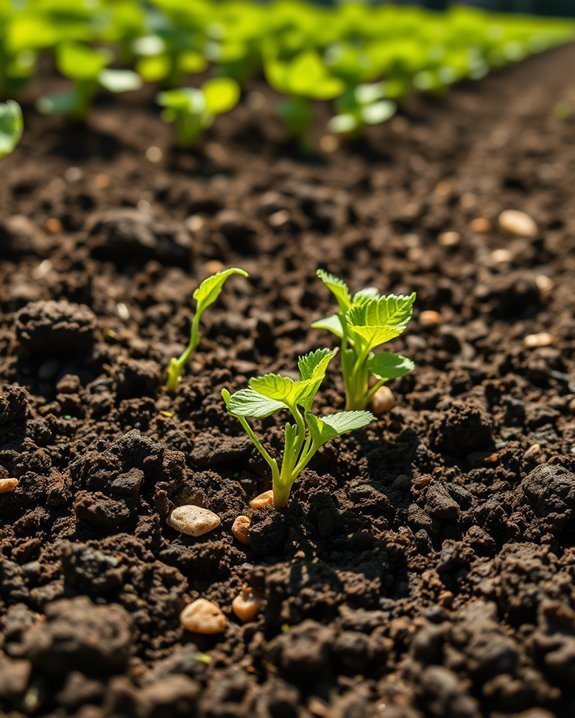
Before you plant your cucumbers, it’s crucial to prepare your soil to guarantee healthy growth and a bountiful harvest.
Focus on the soil composition, ensuring it’s well-draining and rich in organic matter. You might need to add soil amendments like compost or aged manure to enhance fertility.
This way, your cucumbers will thrive, leading to a delicious and abundant harvest.
Unique Cucumber Trellis Ideas
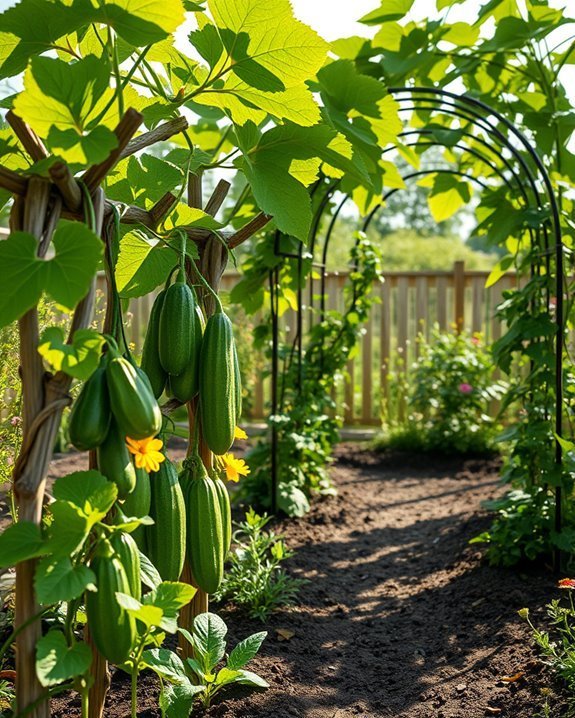
As you design your cucumber garden, consider unique trellis ideas that not only support your plants but also add visual interest.
Think about using repurposed materials like old ladders or wooden pallets to create cucumber art. These vertical aesthetics enhance your garden’s charm while maximizing space.
With a little creativity, your trellis can become a stunning focal point in your outdoor oasis.
Vertical Gardening Techniques for Cucumbers
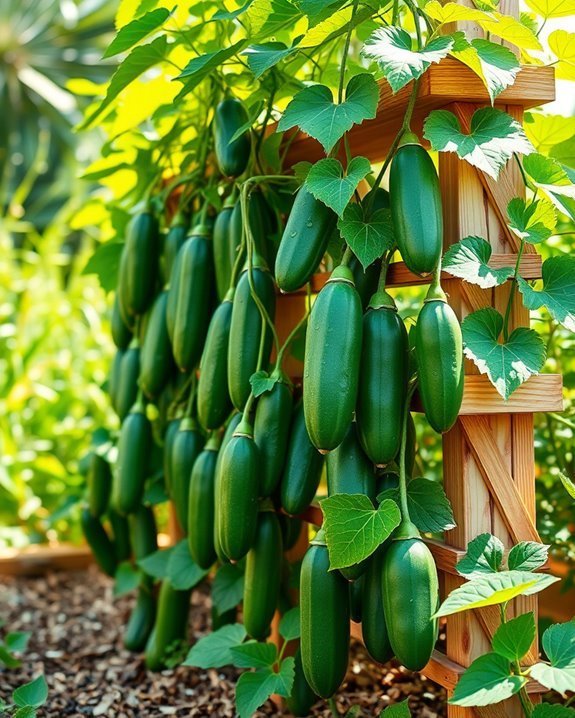
When you embrace vertical gardening techniques for cucumbers, you’ll not only save space but also promote healthier growth.
Use sturdy vertical support like trellises or cages to keep your plants elevated, allowing for better air circulation. This helps reduce cucumber pests and diseases, leading to a more abundant harvest.
Plus, harvesting becomes easier when your cucumbers are off the ground!
Succession Planting for Continuous Harvests

To enjoy a steady supply of fresh cucumbers throughout the growing season, consider succession planting.
Start by creating a planting schedule that staggers your sowing dates, ensuring you plant new seeds every few weeks.
This method not only maximizes your harvest but also promotes crop rotation, helping to maintain soil health and reduce pests.
Keep your garden thriving with this simple technique!
Using Raised Beds for Cucumber Growth

While raised beds can elevate your gardening experience, they also provide an ideal environment for cucumbers to thrive.
The raised bed benefits include improved drainage and soil quality, allowing your cucumbers to flourish.
For the best results, consider a raised bed design that maximizes sunlight and airflow. This helps prevent disease and encourages healthy growth, yielding a bountiful harvest.
Mulching for Moisture Retention
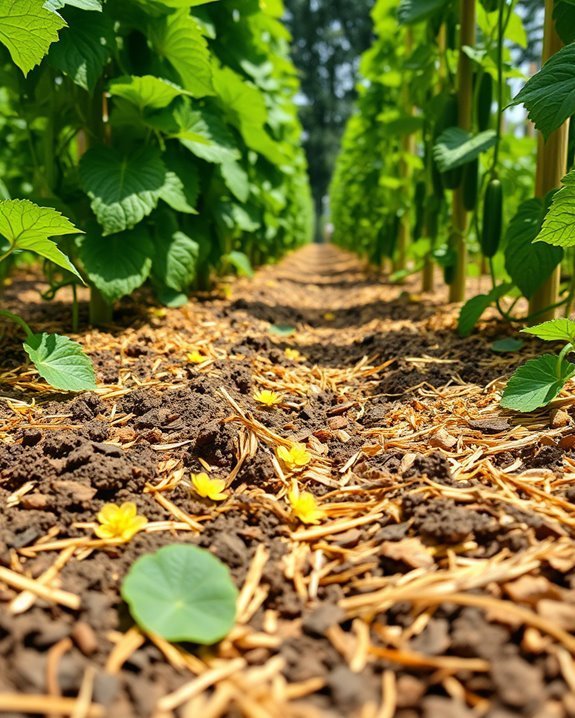
Mulching serves as a protective blanket for your cucumber garden, helping to retain moisture and maintain consistent soil temperature.
The mulch benefits extend beyond moisture retention; it also suppresses weeds and prevents soil erosion.
By keeping the soil moist, you’ll encourage healthy root development and promote vigorous growth.
DIY Cucumber Supports and Arbors
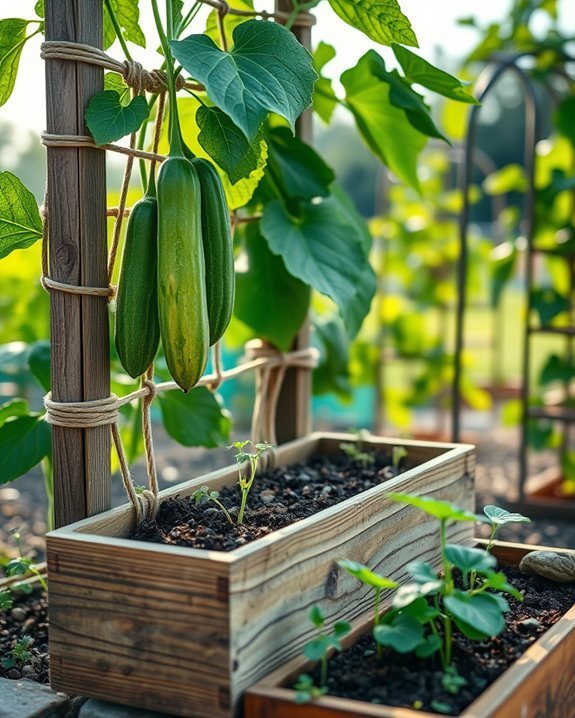
Creating DIY cucumber supports and arbors can transform your garden while maximizing space and promoting healthy growth.
Consider building cucumber archways or decorative trellises to guide your vines upward, allowing for better air circulation and sunlight exposure.
These structures not only enhance your garden’s aesthetic but also make harvesting easier.
With a little creativity, you can enjoy a bountiful cucumber harvest!
Crop Rotation Strategies for Cucumbers
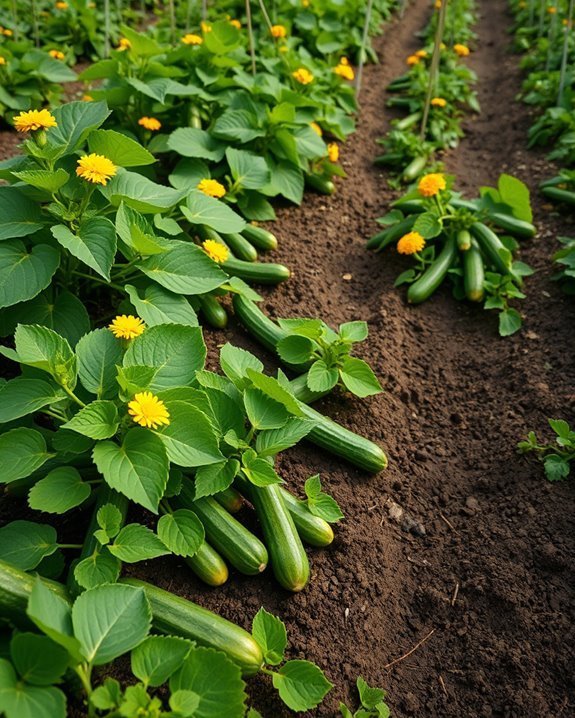
While you might think cucumbers can thrive in the same spot year after year, practicing crop rotation is essential for maintaining soil health and preventing pests and diseases.
By rotating cucumbers with other crops, you’ll enjoy crop rotation benefits like improved soil nutrients and enhanced cucumber disease resistance.
Aim to switch their location annually to keep your garden thriving and healthy.
Interplanting Cucumbers With Herbs

If you want to maximize your garden’s potential, interplanting cucumbers with herbs can be a fantastic strategy.
This combination not only saves space but also enhances growth through cucumber herb benefits.
Basil, dill, and cilantro can help deter pests and attract beneficial insects, making your garden healthier.
Experiment with different interplanting strategies to discover what works best for your cucumbers and herbs!
Benefits of Growing Cucumbers From Seeds
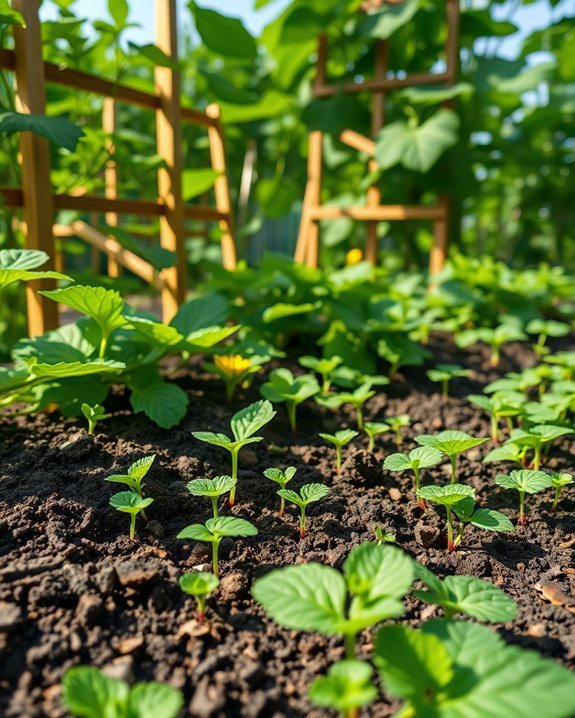
Growing cucumbers from seeds offers several advantages that can enhance your gardening experience. You’ll enjoy better seed germination rates, allowing for stronger, healthier plants.
Additionally, growing from seeds gives you access to a wider range of cucumber varieties, letting you choose flavors and textures that suit your taste.
Plus, starting from seeds can be more cost-effective, making it a smart choice for any gardener.
Using Row Covers for Early Growth

Once your seedlings are ready for the outdoors, using row covers can greatly boost their early growth.
These lightweight materials provide essential early season protection against frost and pests, helping your cucumbers thrive.
Simply drape the covers over your plants, securing them to the ground.
This simple step can lead to healthier, stronger plants and a more bountiful harvest.
Best Fertilizers for Cucumbers
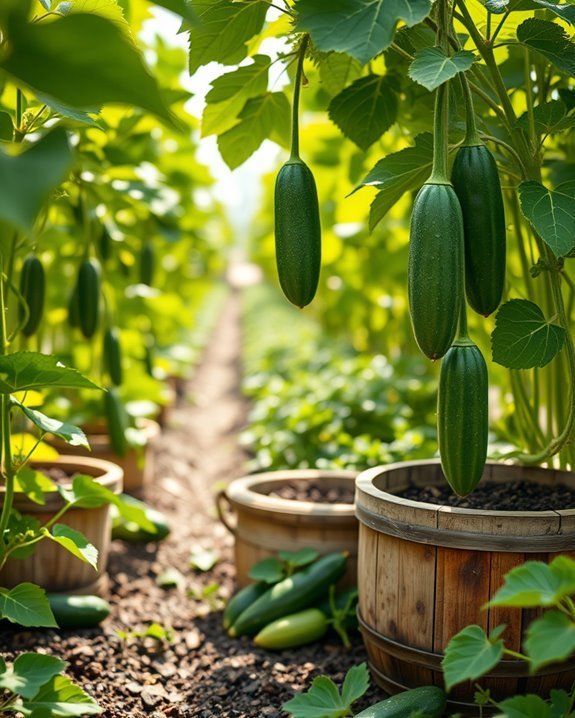
Choosing the right fertilizer can make a significant difference in the health and yield of your cucumbers.
Your plants have specific cucumber nutrient requirements, including nitrogen, phosphorus, and potassium.
Consider using organic fertilizer options like compost, well-rotted manure, or fish emulsion.
These won’t only meet those needs but also promote soil health, ensuring your cucumbers thrive throughout the growing season.
Pruning Techniques for Better Yield
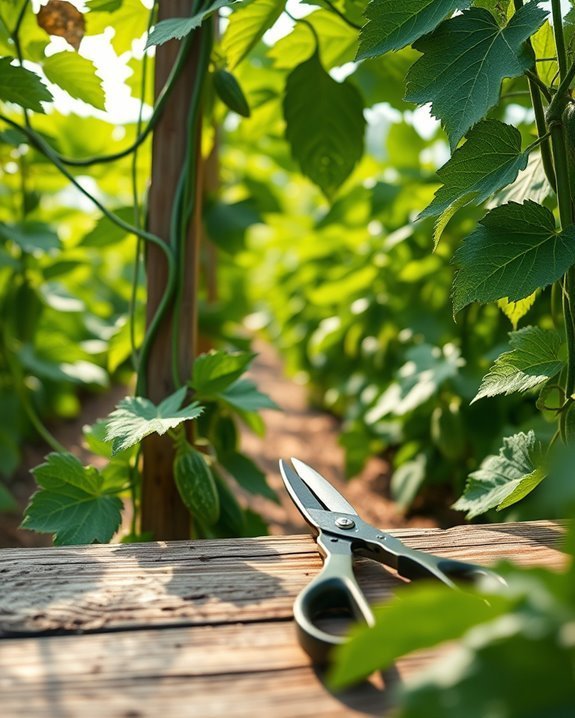
Proper fertilization sets the stage for healthy cucumber plants, but pruning plays an essential role in maximizing your yield.
By using effective pruning techniques, like removing excess leaves and lateral shoots, you enhance air circulation and light exposure.
These pruning benefits lead to more robust growth and a higher fruit set, ensuring you enjoy a bountiful harvest of fresh cucumbers.
Harvesting Cucumbers at the Right Time

When should you pick your cucumbers for the best flavor and quality?
Perfect cucumber timing is essential; harvest them when they’re still firm and about 6-8 inches long. This guarantees ideal harvesting for the tastiest results.
Check your plants every few days during peak growing season, and don’t let them become overripe, as this can diminish their flavor and texture.
Cucumber Salad Recipes for Fresh Harvests
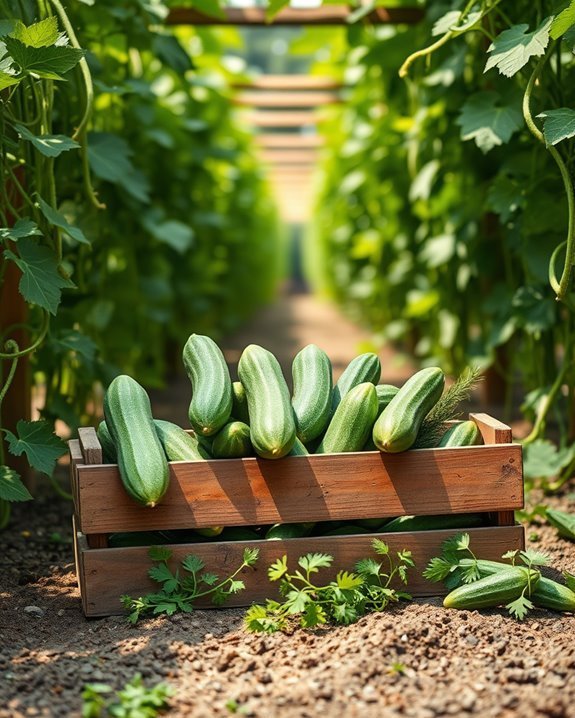
After enjoying the tangy crunch of homemade pickles, you might want to explore more ways to use fresh cucumbers from your garden.
Try different cucumber salad variations, like a classic Greek salad or a zesty Thai cucumber salad.
Don’t forget to whip up invigorating cucumber dressings, such as a simple vinaigrette or yogurt-based dressing, to elevate your salads and enjoy your harvest!
Growing Cucumbers in Hydroponic Systems
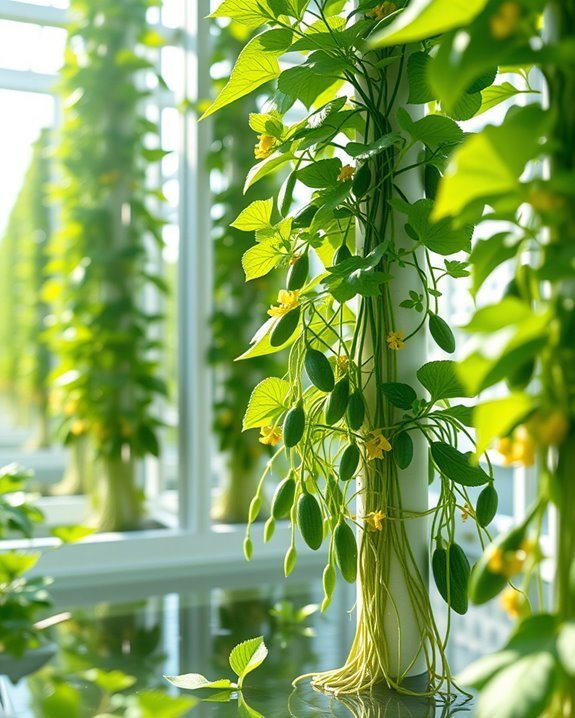
While traditional gardening has its charm, growing cucumbers in hydroponic systems offers a modern twist that maximizes space and efficiency.
These systems allow you to cultivate cucumbers without soil, relying on nutrient solutions to provide essential minerals and vitamins.
You’ll enjoy faster growth rates and healthier plants, making hydroponics an excellent choice for anyone looking to reap a bountiful harvest.
Attracting Pollinators to Your Cucumber Garden
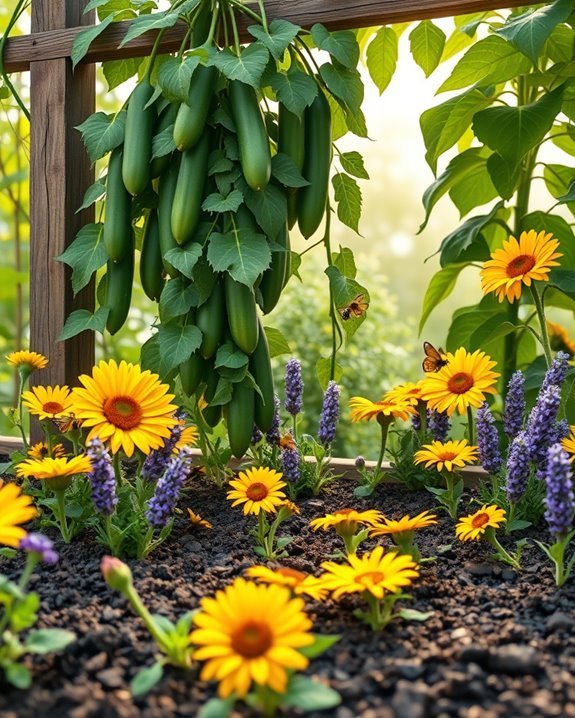
To guarantee a thriving cucumber garden, attracting pollinators is essential, as these beneficial insects play a crucial role in the fertilization process.
Planting pollinator friendly flowers like lavender and zinnias can draw in bees and butterflies.
Additionally, creating a diverse habitat with native plants will help attract beneficial insects, ensuring your cucumbers flourish and produce a bountiful harvest.
Using Greenhouses for Extended Growing Seasons
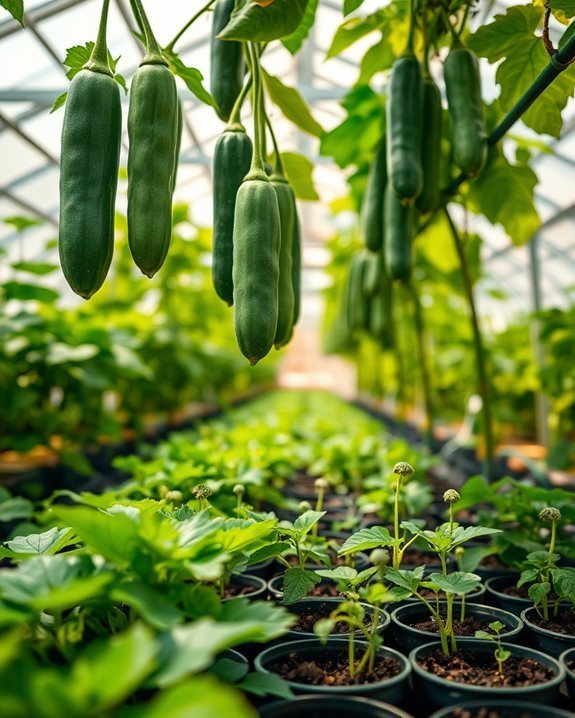
If you want to extend your cucumber growing season, using a greenhouse can be a game-changer.
Greenhouse benefits include temperature regulation, which protects your plants from frost and harsh weather.
With this controlled environment, you’ll enjoy extended seasons, giving you the chance to harvest fresh cucumbers earlier in spring and later into fall.
Plus, it creates ideal conditions for healthy growth!
Companion Gardening: Cucumbers and Tomatoes
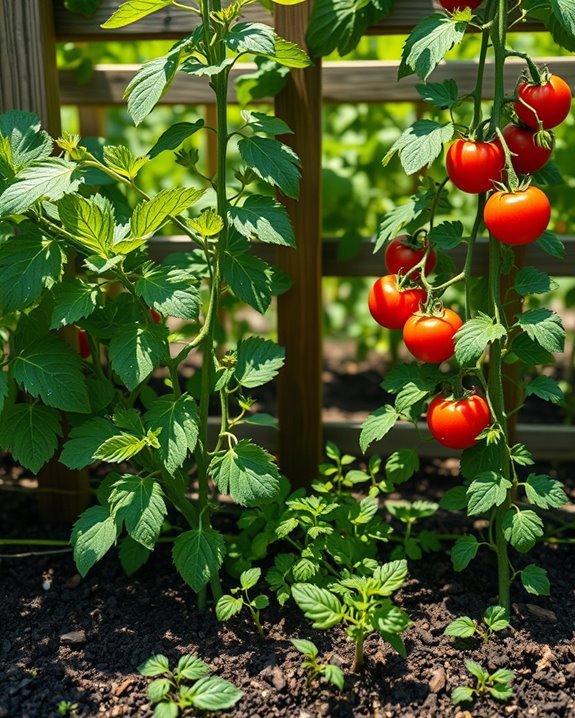
Companion gardening can lead to a thriving vegetable patch, especially when you pair cucumbers with tomatoes.
These plants enhance each other’s growth, with tomatoes providing necessary shade for cucumbers while keeping pests at bay.
By practicing proper tomato plant care, you’ll guarantee both plants flourish, leading to delicious cucumber flavor profiles that elevate your dishes.
Enjoy the benefits of this beneficial garden duo!
Using Trellises to Maximize Space
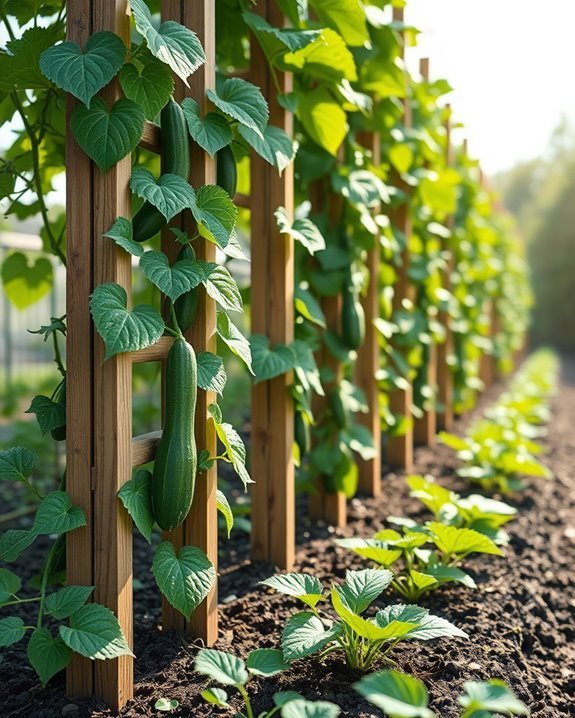
Trellises are a fantastic way to maximize space in your cucumber garden, allowing your plants to climb vertically instead of sprawling across the ground.
With proper cucumber spacing, you can enhance air circulation and sunlight exposure.
Use durable trellis materials like wood, metal, or even repurposed items to create a supportive structure that encourages healthy growth and abundant harvests.
The Role of Sunlight in Cucumber Cultivation

Sunlight plays an essential role in cucumber cultivation, as these plants thrive in bright, direct light.
To guarantee healthy growth and a bountiful harvest, meet their light requirements by providing at least six to eight hours of sunlight exposure each day.
Insufficient light can lead to weak plants and poor yields, so place your cucumber garden in a sunny spot for ideal results.
Conclusion
By implementing these 40 easy cucumber garden ideas, you’re setting yourself up for a bountiful and healthy harvest. Did you know that cucumbers are made up of about 95% water? This makes them not only rejuvenating but also an excellent choice for hydration. Remember to choose the right varieties, prepare your soil well, and consider companion plants to maximize growth. With a little care and creativity, you’ll enjoy a thriving cucumber garden in no time!